
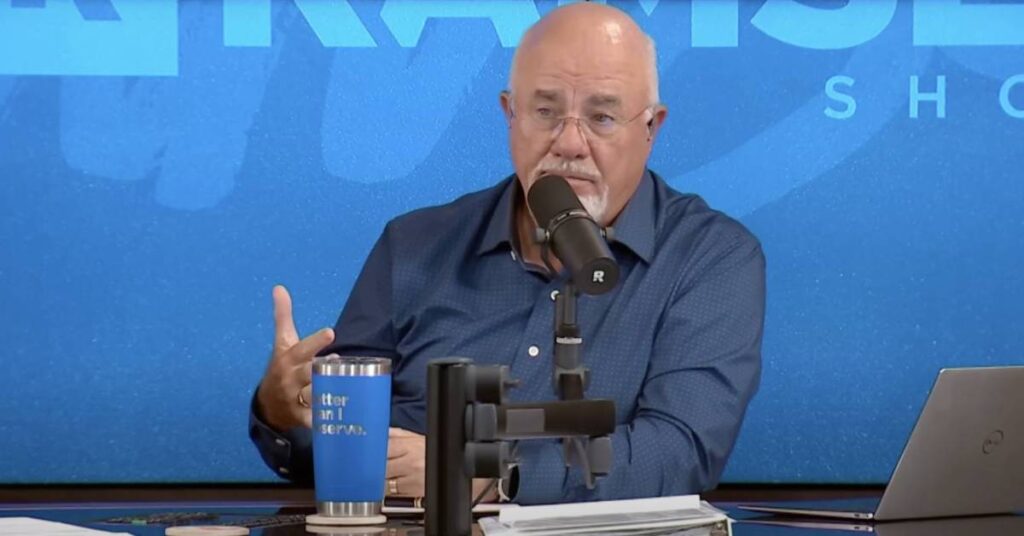
Ryan, a recent caller to The Dave Ramsey Show, explained that he’s in “a bit of a jam” and — while he tried to consolidate his loans — he didn’t qualify and now he doesn’t know how to get out of the crushing debt he’s wracked up and the poor credit he now has as a result.
Ryan has a base salary of US$140,000 a year, though he usually makes anywhere from US$180,000 to US$220,000 annually — that is, until he had a setback. Ryan had a workplace injury that left him out of work for a year-and-a-half and on worker’s comp payments. The events in his life now mean he owes a combined total of US$181,000 on his credit cards, personal loan, car loan and student loans, in addition to his US$767,000 mortgage. The caller has a stepson and a girlfriend who lives with him — she makes between US$60,000 and US$70,000 herself.
Ramsey tends to be critical of debt and this time was no exception: “I’m talking to a single guy who makes US$180,000 and owes US$180,000,” he observed, following with blunt advice for how the caller could fix his situation.
Unfortunately, the caller didn’t seem too interested in taking this advice.
A cautionary tale in lifestyle inflation
Ramsey was dismayed at how much the caller owed, especially relative to how much he makes; both the caller’s debt and his salary far outweigh the amount most people have. Yet, the caller managed to dig himself into significant consumer debt. But stats tell us, he isn’t unlike many Canadians.
According to The Globe and Mail, Canadians’ total household debt — including mortgages, credit cards, student loans and vehicle loans, as well as personal loans, home equity lines of credit (HELOCs) and unpaid bills — reached approximately CA$3.07 trillion in the first quarter of 2025. The caller, with his mortgage and other debt, owes a combined total of US$947,000 — or over CA$1.3 million.
According to numbers from financial data and analytics website Trading Economics, the average weekly earnings in Canada (including overtime) were approximately CA$1,291 as of March 2025.
When calculated over 52 weeks, this equates to an approximate annual income of CA$67,132. Without the exchange, this means the caller earns over two-and-a-half times that amount — and still can’t get his finances in order, leaving Ramsey to declare, “You’ve given your life away and the way you get it back is you’re gonna have to give up some stuff.”
Ramsey made multiple suggestions to the caller, including:
- Selling his home — valued at over US$1 million
- Selling the expensive car that the caller is currently making payments on
- Cutting spending dramatically and aggressively paying down debt
However, the caller was quick to dismiss these suggestions with rationalizations. He didn’t want to sell the house, for example, because his credit score isn’t good enough to buy a new one. And he didn’t seem willing to cut back on his spending, instead going on the defensive and telling Ramsey he’d already paid back a few thousand over the past few months.
Ramsey was unimpressed, telling the caller, “Sell your car, sell your stupid house. Get you another one later, when you get your act together. But you don’t want any pain, you don’t want to sacrifice.”
How to get out of debt
While the caller was interested in a consolidation loan, Ramsey said this was the wrong approach — “It’s mathematically impossible to borrow your way out of debt,” he said. Ramsey’s alternatives of selling the home or car, or living frugally, however, were all options that would make a meaningful difference in helping the caller pay off what he owes.
“Live on beans and rice and pay US$140,000 a year onto this debt, and you are debt-free in a year and a half. You have absolutely no freaking life. You’ve been living like you make twice what you make and walking around, strutting around acting like it’s OK, and it isn’t OK. It’s stupid,” Ramsey said.
While he didn’t overtly mention it, Ramey’s classic technique, the debt snowball method, could come in handy here. It involves paying the lowest balance debt off first while paying minimum balances on your other loans, then moving into the next lowest balance, then the next and so on until you’ve paid off all you owe, building momentum as you go.
However, this approach requires you to make extra payments to your debt — ideally, the largest amount you can, as often as you can. The idea is that though you may be paying more in interest in the long term, you’re building confidence in your ability to become debt-free.
But regardless of which debt payoff method you choose, you still need to free up as much of your budget as possible. “And it’s going to hurt. Getting well is going to hurt. But not getting well is going to hurt more,” cautions Ramsey.
This means making aggressive budget cuts and other lifestyle changes such as:
- Reducing fixed expenses by downsizing a home or selling a car
- Cutting out all nonessential spending like food and entertainment from your budget — at least temporarily
- Working more hours or getting a side hustle to devote more of your income toward debt
- And though Ramsey himself advises against it, and this caller couldn’t get one, you could try to consolidate your loans into a single monthly payment and negotiate a lower interest rate
- Set a goal of when you want to be debt-free and track your progress towards it
- Develop a realistic budget with these things in mind and learn to live within those means
- And lastly, once you’ve paid it off, start setting money aside in an emergency fund to help rebuild your finances and learn the secrets of the stealthy wealthy
The reality here, as Ramsey pointed out, is that the caller has a substantial income, relative to the average. It shouldn’t be impossible for him to eliminate his debt (in fact both Ramsey and cohost John Deloney did it), but he’s going to need to adjust his lifestyle while he still has the option. As for why the caller isn’t budging yet? Ramsey concludes, “When you get to hurting enough, Ryan, you’re going to figure this out. But you’re not hurting enough yet.”
Sources
1. YouTube: “You Spend And Rationalize Like You’re In Congress!” by The Ramsey Show Highlights (June 25, 2025)
2. The Globe and Mail: Canadians’ household debt burden rises slightly in the first quarter by The Canadian Press (June 12, 2025)
3. Trading Economics: Canada Average Weekly Earnings
This article provides information only and should not be construed as advice. It is provided without warranty of any kind.