
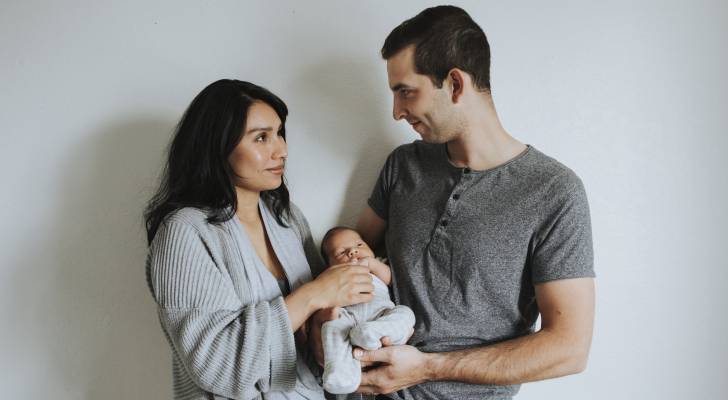
Having your first child is a life-changing event. You’re suddenly responsible for someone else’s well-being, and that can prompt major lifestyle changes — including the decision for one parent to stay home full-time.
Must Read
- Thanks to Jeff Bezos, you can now become a landlord for as little as $100 — and no, you don’t have to deal with tenants or fix freezers. Here’s how
- I’m 49 years old and have nothing saved for retirement — what should I do? Don’t panic. Here are 6 of the easiest ways you can catch up (and fast)
- Dave Ramsey warns nearly 50% of Americans are making 1 big Social Security mistake — here’s what it is and 3 simple steps to fix it ASAP
For many families, the financial strain of child care forces their hand. But what if child care isn’t the issue? What if one parent simply wants to be home with the baby during those early years, and you can work it out financially — if you make sacrifices?
That’s the case for one 30-something couple evaluating whether the wife should leave her customer service job to become a stay-at-home mom until their child enters preschool. To make it work, the husband is considering temporarily reducing his 401(k) contribution from 15% to 6%, enough to get the full company match and end up with a $350 monthly surplus in their budget. If he paused contributions entirely, they’d have $700 left each month.
With $150,000 in liquid assets and $300,000 in retirement savings between them, they’re in a solid financial position, but they’re still asking the right question: Can we afford to do this? Here’s what to consider.
Consider the impact on your retirement savings
First, let’s acknowledge the good news: this couple’s retirement savings are well above the norm for their age group. According to Federal Reserve data, the median retirement account balance for American households of those under the age of 35 is just $18,800. They’re ahead of the curve, but do they have enough to pause or reduce contributions?
Even if they never contributed another dollar to retirement (not a good idea, but let’s look at the numbers), and let the existing $300,000 grow at a modest 8% annual return for 30 years, they’d still end up with more than $3.3 million in retirement. That’s enough to generate about $132,000 per year in retirement income using the 4% rule, which says if you withdraw 4% of your retirement in the first year and adjust for inflation after that, your retirement savings should last 30 years.
So, does it make a difference to stop contributing for four years? Yes, but it’s not catastrophic. We don’t know the husband’s salary, but assuming a conservative estimate of $80,000 to $100,000 per year, dropping contributions to 6% would mean forgoing approximately $30,000 to $40,000 in retirement savings over four years — money that, by retirement age, would have likely grown into hundreds of thousands. It’s not ideal, but it’s also not a make-or-break amount for a household with strong savings habits and a plan to ramp contributions back up later.
One important note: Never drop below the company match unless your health or your home is at risk. That is essentially free money from your employer.
Read more: US car insurance costs have surged 50% from 2020 to 2024 — this simple 2-minute check could put hundreds back in your pocket
What else to consider when weighing one parent staying home
Money for retirement might be the most obvious factor on your mind when deciding whether you can afford to have one parent stay home, but there are other impacts to consider.
Average cost of child care
According to Child Care Aware of America, the national average price of child care for 2024 was $13,128, and it’s even higher in some states. If your family needs to pay for care, this should be on the top of your mind. Depending on the number of children and the average salary of the stay-at-home parent, you might actually save money by having one parent stay home.
Career stagnation
The stay-at-home parent doesn’t just lose their salary, however. They also miss out on cost-of-living wage increases, promotions, and, in some fields, industry changes that make it harder to return to the workforce later. In this situation, the wife earns a modest income and has strong prospects for returning to the workforce in a similar role — but it’s worth thinking about the consequences of being away from work for so long.
This couple may be in the newborn trenches right now, but as their child grows and they get into a routine, the wife may find she has more free time when the baby naps, and later attends preschool or pre-K. She can consider attending school or job training part-time or remotely. This could set her up for better earnings, and the family for even better financial security, when it does come time for her to go back to work.
Retirement accounts for the stay-at-home parent
Not working often also means you aren’t contributing to your retirement accounts, which can have a long-term impact on growth. However, the working partner can contribute to a spousal IRA, which is worth considering if you can swing it. Consider speaking to a financial advisor about it.
Mental health impacts
Some parents thrive at home with a young child, but others struggle with isolation or the lack of adult interactions — and you might not know which camp you fall into until you take the leap. The ways parents might find to counteract this — such as signing up for mommy-and-me activities — may carry costs that need to factor into their budget. Have honest conversations with your spouse about expectations, division of labor, and adjustments you can make to preserve both parents’ mental health.
Ultimately, having one parent stay at home does work for this family. If you’re considering a similar move, be intentional. Cut back on excessive spending, make sure to contribute enough to retirement to get the company match, and consider opening a spousal IRA to support long-term savings. With a solid plan and clear communication, this could be a rewarding choice for your family, both financially and personally.
What to read next
- How much cash do you plan to keep on hand after you retire? Here are 3 of the biggest reasons you’ll need a substantial stash of savings in retirement
- There’s still a 35% chance of a recession hitting the American economy this year — protect your retirement savings with these 5 essential money moves ASAP
- This tiny hot Costco item has skyrocketed 74% in price in under 2 years — but now the retail giant is restricting purchase. Here’s how to buy the coveted asset in bulk
- Want an extra $1,300,000 when you retire? Dave Ramsey says this 7-step plan ‘works every single time’ to kill debt, get rich in America — and that ‘anyone’ can do it
Join 200,000+ readers and get Moneywise’s best stories and exclusive interviews first — clear insights curated and delivered weekly. Subscribe now.
This article provides information only and should not be construed as advice. It is provided without warranty of any kind.