
WSW, NY, September 25th, 2026, NewsDirect
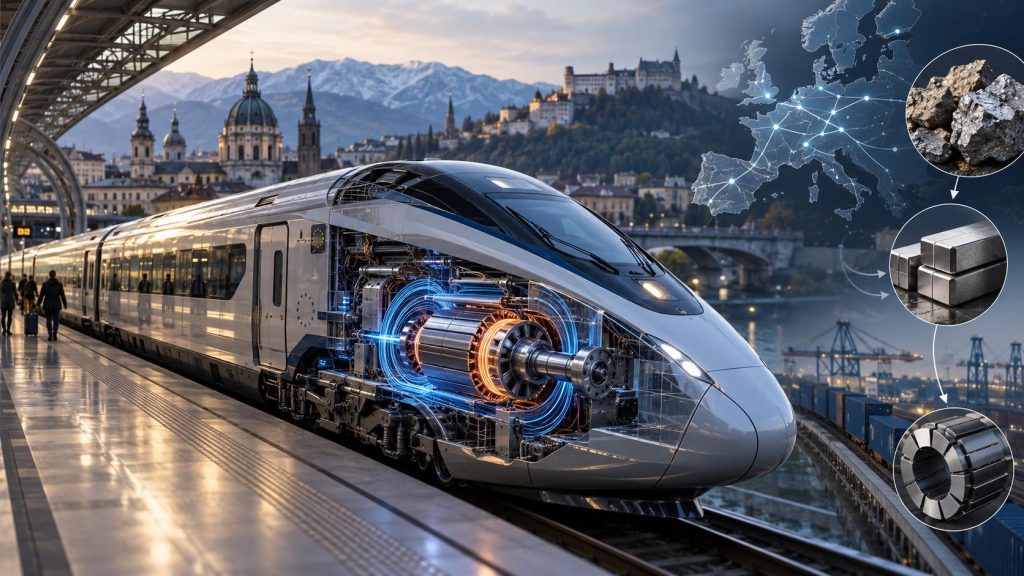
Europe can build world-class cars and wind turbines, yet the supply of a component inside them remains overwhelmingly in China’s hands. When it launched its RESourceEU plan in December 2025, the European Commission reported that China supplied more than 90% of the EU’s rare earth magnets. These magnets help motors and generators operate efficiently. A shortage can interrupt production far beyond the relatively small market for the magnets themselves.
Europe’s search for alternatives demonstrates a wider need for reliable magnet supplies across the United States and its Western allies. That need might create a commercial opening for companies such as Evolution Metals & Technologies Corp. (NASDAQ: EMAT), which already produces rare earth magnets and is expanding its manufacturing capacity. Its combination of commercial magnet production and initial non-China feedstock deliveries puts it at the manufacturing stage Europe needs to strengthen.
A September 20 Guardian report described renewed European concern over rare earth supply ahead of a Trump-Xi meeting. Trade negotiations can help ease shortages, but manufacturers seeking lasting supply security need alternative suppliers that can deliver finished magnets in volume.
Europe has already seen the cost of interrupted supply. The International Energy Agency reports that China’s April 2025 export controls left automakers in Europe, the United States and elsewhere struggling to obtain permanent magnets. Some reduced production or temporarily shut down. Supplies later recovered, but the disruption showed how quickly a magnet shortage could interrupt factory output.
Evolution Metals has made U.S. and allied supply security central to its business. The U.S.-owned company is pursuing that goal through magnet manufacturing and alternative sources of raw material.
Europe’s Supply Problem Extends Beyond Mines
Europe’s effort to secure those supplies also extends beyond its borders. Its RESourceEU plan calls for financing critical raw materials projects in Europe and partner countries, alongside closer industrial cooperation. The plan illustrates the interest in developing allied supply chains, without establishing a European order or funding award for Evolution Metals.
That manufacturing problem is drawing closer scrutiny in Europe. A May 2026 study by the European Union Institute for Security Studies put China’s share of rare earth refining above 90% and its share of global rare earth magnet output at 94%. In July, Rare Earth Exchanges highlighted the study’s implications for Europe’s ability to turn raw materials into finished industrial products. The study urged Europe to help advanced partner projects scale through joint investment and purchase agreements, warning that domestic rare earth mines might not arrive until the 2030s. Those are policy recommendations, but they explain why existing manufacturing capability is relevant to Europe’s search for alternatives.
Building those supply chains requires factories as well as mines. Rare earth material must be processed and converted into finished magnets before manufacturers can use it. The IEA’s 2026 outlook finds that, in geographically diversified regions, planned magnet production amounts to only about one-third of expected mined supply by 2035. Adding mines without enough downstream factories leaves a substantial gap between available material and the components customers can use.
Evolution Metals already operates at that downstream stage. In June, it announced customer quality certification with two global Tier-1 electronics manufacturers across six grades of high-performance sintered magnets, including grades designed for high temperatures. The company was producing those certified grades at commercial scale, demonstrating its ability to meet those customers’ requirements. Other customers and applications require their own qualifications.
The company has also begun receiving material from outside China. In July, EM&T received an initial five metric tons of neodymium-praseodymium metal, a key magnet ingredient, under its agreement with Senri Trading, sourced from SRE Vietnam. That gives EM&T a source of material for its magnets outside China, although expansion will require continued deliveries at higher volumes.
A Larger Manufacturing Base
With production and an alternative material source in place, Evolution Metals is expanding its existing magnet manufacturing operations in Pohang, South Korea, with the next milestone scheduled for November. Its September 10 disclosure says 13 additional ULVAC production machines, covered by binding purchase orders, are due for delivery and installation that month. Management expects the expansion to increase annual capacity from approximately 1,000 to 10,000 metric tons, including about 6,000 tons of high-performance sintered magnets.
The Pohang expansion is separate from the company’s planned U.S. industrial campus. Reaching the target requires equipment commissioning, facility and power expansion, financing and sufficient feedstock. Turning the added capacity into sales also requires customer qualifications and firm orders.
Recent News Highlights from Evolution Metals & Technologies Corp. (NASDAQ: EMAT)
Evolution Metals & Technologies Provides Initial Revenue Guidance of $400-460mm for Fiscal Year 2027
See Also >>
Important Disclaimers and Disclosures: The author, Wall Street Wire, is a content and media technology platform that connects the market with under-the-radar companies. The platform operates a network of industry-focused media channels spanning finance, biopharma, cyber, AI, and additional sectors, delivering insights on both broader market developments and emerging or overlooked companies. Wall Street Wire is not a broker-dealer or investment adviser. References to market size estimates, valuations, price targets, or other third-party data are provided strictly for informational purposes. Wall Street Wire receives cash compensation from Evolution Metals & Technologies Corp. (the “Issuer”) for coverage and awareness services, which are provided on an ongoing subscription basis. The content above is a form of paid advertising and promotion and is for informational purposes only and does not constitute financial or investment advice. This article may contain forward-looking statements about the Issuer’s products, plans, or prospects that are subject to risks and uncertainties; actual results may differ materially, and readers should review the Issuer’s public filings on SEC EDGAR (sec.gov/edgar) for full risk factors. Market size figures, research estimates, or other third-party data referenced in this article are quoted from publicly available sources believed to be reliable; however, we do not independently verify or endorse them, and additional figures or estimates may exist. Full compensation details, information about the operator of Wall Street Wire, and the complete set of disclaimers and disclosures applicable to this content are available at: wallstwire.ai/disclosures. This article should not be considered an official communication of the Issuer.
Contact
Wall Street Wire
[email protected]