
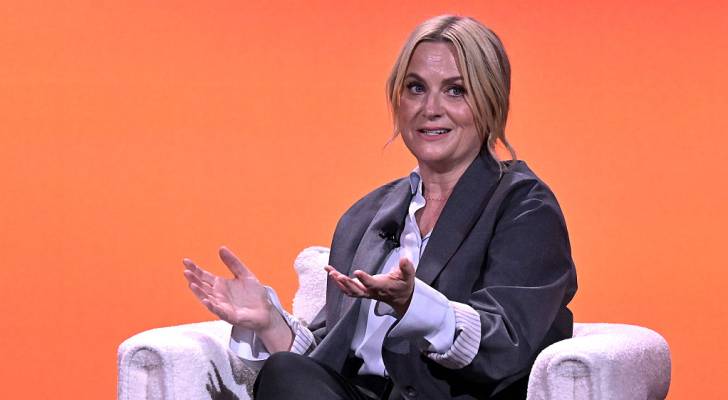
Comedian Amy Poehler has accomplished some amazing things in her career: she’s a quadruple-threat actor, director, producer and writer, with an Emmy and a Globe Globe to her name.
Must Read
- Thanks to Jeff Bezos, you can now become a landlord for as little as $100 — and no, you don’t have to deal with tenants or fix freezers. Here’s how
- Robert Kiyosaki says this 1 asset will surge 400% in a year — and he begs investors not to miss its ‘explosion’
- Dave Ramsey warns nearly 50% of Americans are making 1 big Social Security mistake — here’s what it is and 3 simple steps to fix it ASAP
And she accomplished all of those things whether she was feeling up to it or not. Poehler recently told the story of filming a movie scene with Alec Baldwin while she was dangerously ill, with a temperature of 104 degrees.
Sitting down with Oscar-winner Olivia Colman on her new podcast Good Hang with Amy Poehler, the comedian revealed that she wouldn’t have considered taking a sick day “in a million years.” [1]
While admitting this was “potentially not a good choice,” Poehler attributed this attitude to hustle culture taught to her generation: “I think that we were sold a productivity myth — like, hustle, hustle, hustle — and it’s really ingrained in us.”
In fact, Poehler said she never missed a day of work while filming Parks and Recreation, which ran for over 120 episodes. “People think that’s a weird statistic because they’re like, ‘Well, okay. Maybe not something to brag about.’ And I’m like, ‘Is it not?’”
Attitudes about work have definitely shifted, perhaps due to the COVID-19 pandemic and trends like stagnant pay. However, many put this shift down to a generational divide, Poehler and Colman included.
“Some of the younger people — I don’t know where it comes from — but if they have a little bit of a cold, they won’t do the show, and I don’t understand,” Colman noted.
“I kind of understand that this idea of like maybe take care of yourself, Gen Xers, a little bit more than you did and not pressure everybody to hustle,” said Poehler. “But perhaps we’ve overcorrected.”
So is the decline of hustle culture really due to “kids these days,” or is a larger shift happening across generations? Here’s what the experts say — and what you can do to balance productivity with healthful rest.
The rise (and fall) of hustle culture
According to experts speaking with BBC, the rise-and-grind trend has its roots in the entrepreneurial boom of the 1990s and early 2000s, when Silicon Valley and startup culture came to dominate the cultural narrative about work and success. [2]
Companies famous for their intense work cultures, including Google and Facebook, produced a new generation of rockstar CEOs and promoted the idea that entrepreneurship was the new ticket to wealth and fame. The long hours also gave rise to a whole lifestyle, with hip products to go with it: Bulletproof coffee, bone broth, sleep trackers, and other forms of “biohacking” to maximize productivity.
“Hustle culture ideology says that people are overworking not because they’re economically driven to, but simply because this is the way go-getters get what they want,” said Nick Srnicek, a lecturer in digital economy at King’s College London, to BBC.
This high-achieving lifestyle was promoted and spread through social media (with appropriate trending hashtags), but it was not destined to last. Coinciding with the upheaval of the pandemic, the rise of burnout in the cultural conversation was perhaps an inevitable outcome of all the time dedicated to hustling.
Trending: I’m almost 50 and have nothing saved for retirement — what now? Don’t panic. These 6 easy steps can help you turn things around
In April this year, Glassdoor reported that the share of company reviews mentioning “burnout” increased 32% year-over-year in Q1 2025 to the highest level since the workplace reviewer began collecting data in 2016 and 50% higher than Q4 2019 before the COVID-19 pandemic began. [3]
According to Allison Tibbs, a wellness-focused executive coach, the pressure to “push through” exhaustion or illness is now seen as “irresponsible” in the wake of COVID-19.
“If you’re sick, just stay home,” she said in an interview with CNBC. [4] “That way you don’t get other people sick, and you can really take care of yourself.”
How Gen Z is changing workplace culture
“Since COVID-19, people have started to reject hustle culture and pull back – they’re no longer willing to do the work that doesn’t matter, and they’re setting boundaries between themselves and toxic narratives,” said Brooks E. Scott, a California-based executive coach in conversation with the BBC. “They see that hustle culture is no longer working as the key to becoming successful.”
For people born between the mid-1990s and all the way to the early 2010s, their economic reality is far worse than what Gen X and millennials experienced before them. Higher costs of living, climate change, and a startling number of "unprecedented events” have marked their young lives and made the idea that hustle is the key to success seem silly and outdated.
As WeWork reports, for Gen Z, well-being comes first, and leading a fulfilling lifestyle outside of work is key. [5] And less dedication to the grind has knock-on benefits for employers, including lower turnover rates and reduced health care costs.
#Grinding or #Resting: How to strike the balance
A study published in the Journal of Occupational Health found that the risk of burnout doubles when employees raise their working hours from 40 to 60 hours per week. [6] A Mercer study found that over 80% of employees feel at risk of burnout, a jump from 63% in 2019, and Gen Z and millennials feel at the greatest risk of all, in spite of their anti-hustle attitudes. [7]
So how can you kick the addiction to toxic productivity and avoid becoming a statistic? Here are some tips:
-
Set a reasonable schedule: The World Health Organization reported 745,000 deaths in 2016 from stroke and heart disease as a result of having worked at least 55 hours a week. Committing to a normal 9-to-5 schedule can ensure you have the balance you need to rest, exercise, eat well and spend time with loved ones, which will all protect you from negative health consequences.
-
Take breaks and vacations: Regular time-outs during your workday can actually help you to focus better. Vacations can also reduce stress and prevent burnout. If your workplace is one where vacations are seen as a luxury, be sure to speak to your boss about how you can plan for least two weeks away to avoid the negative consequences of overwork.
-
Work smart, not long: Emphasizing output over hours spent at work will help you to see that long hours aren’t necessarily the best indicator of impact. Look for ways to maximize your productivity in the time you have, without resorting to working past 5 pm.
-
Find meaning outside of work: One of the easiest ways to get on the burnout path is to put too much of your self-identity into your job. Look for ways to engage with your community and create a fulfilling role outside of your job, including volunteering, an engaging hobby, or spending more time with family and friends. These activities can remind you that work is not the only way you can add value to the world.
What to read next
- Dave Ramsey says this 7-step plan ‘works every single time’ to kill debt, get rich — and ‘anyone’ can do it
- Are you richer than you think? 5 clear signs you’re punching way above the average American’s wealth
- Warren Buffett used 8 simple money rules to turn $9,800 into a stunning $150B — start using them today to get rich (and then stay rich)
- This tiny hot Costco item has skyrocketed 74% in price in under 2 years — but now the retail giant is restricting purchase. Here’s how to buy the coveted asset in bulk
Join 200,000+ readers and get Moneywise’s best stories and exclusive interviews first — clear insights curated and delivered weekly. Subscribe now.
Article sources
We rely only on vetted sources and credible third-party reporting. For details, see our editorial ethics and guidelines.
Good Hang With Amy Poehler (1); BBC (2); Glassdoor (3); CNBC (4); WeWork (5); Journal of Occupational Health (6); Mercer (7)
This article originally appeared on Moneywise.com under the title: Amy Poehler says she worked with a 104 fever, never took sick days — but suggests young people have ‘overcorrected’
This article provides information only and should not be construed as advice. It is provided without warranty of any kind.