
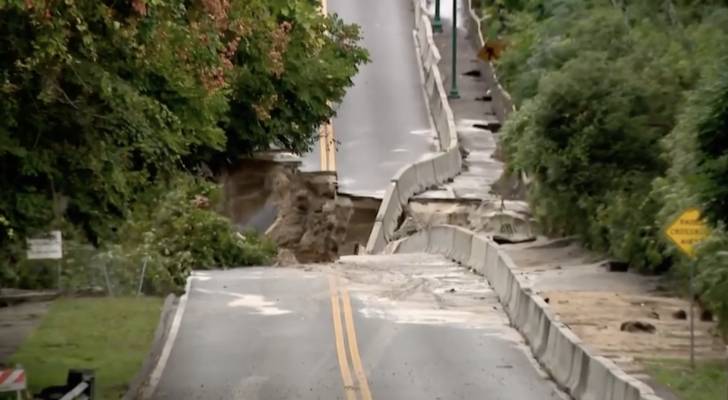
A devastating downpour in central Florida dumped nearly 19 inches of rain in just a few hours this week, washing away roads, flooding homes, and leaving entire neighbourhoods underwater in Lake County, north of Orlando, according to local NBC affiliate WESH 2.
The flooding was so severe that parts of Mount Dora and Eustis were declared local disaster zones (1). Streets crumbled into deep ravines, neighbourhoods were cut off, and a citywide boil water advisory remains in effect as officials rush to repair water and sewage systems before the holidays (2).
Must Read
- Thanks to Jeff Bezos, you can now become a landlord for as little as $100 — and no, you don’t have to deal with tenants or fix freezers. Here’s how
- Robert Kiyosaki says this 1 asset will surge 400% in a year — and he begs investors not to miss its ‘explosion’
- Dave Ramsey warns nearly 50% of Americans are making 1 big Social Security mistake — here’s what it is and 3 simple steps to fix it ASAP
A city split in two
Helicopter footage captured by WESH 2 showed the magnitude of the destruction, including roads caved in dangerously close to homes. There was also visible devastation along Donnelly Street, one of Mount Dora’s main routes into downtown.
“It is devastating. We need to get it open,” said Police Chief Michael Gibson, who confirmed the road won’t reopen in time for Christmas.
Nearby, Waterman Village, soaked ground tumbled into a ravine just feet away from residential homes.
The county’s emergency management director confirmed that the community has sustained damage to its drinking water, wastewater, and reclaimed water systems (1).
A wake-up call for homeowners
The flood occurred before the holiday travel season, which cut off key access routes into the area.
While Florida is no stranger to hurricanes, this out-of-the-blue torrential rain proves that catastrophic flooding can happen at any time.
Homeowners’ insurance typically does not cover flood damage. Without a dedicated National Flood Insurance Program (NFIP) plan or private flood policy, homeowners could be left to shoulder tens of thousands of dollars in repairs.
An inch of floodwater can cause up to thousands of dollars in home damage.
In higher-risk flood zones, the cost of not being insured can far exceed the cost of coverage (3).
Trending: I’m almost 50 and have nothing saved for retirement — what now? Don’t panic. These 6 easy steps can help you turn things around
How to know if you’re at risk
Flood risk isn’t determined solely by proximity to water. Urban drainage issues, low-lying terrain, and extreme rainfall patterns can all contribute, according to the National Oceanic and Atmospheric Administration (NOAA) and the Natural Resources Defence Council (4)(5).
To see if your home is in a high-risk flood zone, you can use FEMA’s official Flood Map Service Center (6). Enter your address and review your property’s classification. Areas marked as “Special Flood Hazard Areas” (SFHAs) carry the highest risk, and federally regulated lenders require flood insurance for any building with a federally backed mortgage (7).
Average flood insurance premiums in the U.S. are roughly $899 per year, while Florida’s average is about $865 according to a NerdWallet analysis of FEMA data (8).
Many homeowners assume their communities are safe from flooding, but more than 40% of NFIP flood insurance claims come from properties outside high-risk flood zones (9).
What can homeowners do now?
Regardless of whether you live in a flood-prone or low-lying area, there are steps to prepare before the next storm hits:
- Document your property: Take photos of your home, major systems, and any valuable items — before they are damaged (10).
- Review your insurance: Contact your agent to verify your coverage or request a flood insurance quote if you don’t already have coverage.
- Create a flood emergency plan: Know evacuation routes, have sandbags or barriers ready, and back up important documents digitally.
- Sign up for local alerts: Get notifications about flooding and other emergencies in your area. For example, Lake County’s emergency management system provides text and email updates for flood warnings (11).
- Inspect and maintain drainage: Clear up debris from gutters, storm drains, and nearby culverts regularly. Poor drainage can increase local flood risk (12).
- Build a go bag: FEMA recommends preparing a disaster kit with essentials like flashlights, extra batteries, copies of important documents, a portable phone charger, medication, cash, and bottled water and non-perishable food that will last all family members at least three days (13).
As climate patterns shift, Florida’s flood seasons are stretching longer and becoming less predictable (14). The Lake County washout — with 19 inches of rain falling in a few hours — is a stark reminder that it doesn’t take a hurricane to cause catastrophic damage.
The lesson is clear: Flooding can happen anywhere, at any time, and if you wait to prepare until a storm is on its way, you’ve left it too late.
What to read next
- Dave Ramsey says this 7-step plan ‘works every single time’ to kill debt, get rich — and ‘anyone’ can do it
- Are you richer than you think? 5 clear signs you’re punching way above the average American’s wealth
- Warren Buffett used 8 simple money rules to turn $9,800 into a stunning $150B — start using them today to get rich (and then stay rich)
- This tiny hot Costco item has skyrocketed 74% in price in under 2 years — but now the retail giant is restricting purchase. Here’s how to buy the coveted asset in bulk
Join 200,000+ readers and get Moneywise’s best stories and exclusive interviews first — clear insights curated and delivered weekly. Subscribe now.
Article Sources
We rely only on vetted sources and credible third-party reporting. For details, see our editorial ethics and guidelines.
WESH 2 (1); News 6 Orlando (2); FEMA (3); NOAA (4); NRDC (5); FEMA (6); FEMA (7); NerdWallet (8); FEMA (9); City of Mount Dora (10); Alert Lake (11); NOAA (12); Ready.gov (13); Science X (14)
This article originally appeared on Moneywise.com under the title: Florida ‘wash-out’ dumps 19 inches of rain, flooding homes and roads. How to prepare before climate disaster hits you
This article provides information only and should not be construed as advice. It is provided without warranty of any kind.