
Should you cash out your 401(k) to buy a home?
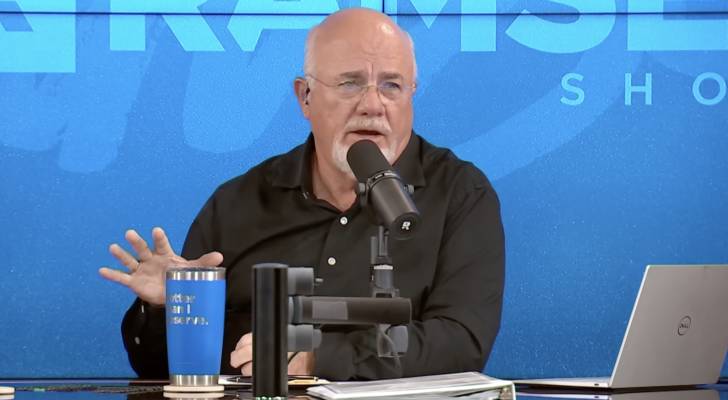
Raiding your retirement savings may seem like a no-no, but Ryan from North Carolina recently called The Ramsey Show to say he’s thinking about doing exactly that (1). His reason: His ex-wife used the share of his 401(k) she got in the divorce to buy a home, then sold it for a solid profit and used that money to buy a second property. Now she’s urging him to do the same, saying real estate will outperform the stock market.
Must Read
- Real Estate: Thanks to Jeff Bezos, you can now become a landlord for as little as $100 — and no, you don’t have to deal with tenants or fix freezers. Here’s how
- Retirement: Dave Ramsey warns nearly 50% of Americans are making 1 big Social Security mistake — here’s what it is and 3 simple steps to fix it ASAP
- Investing: Warren Buffett used 8 solid, repeatable money rules to turn $9,800 into a $150B fortune. Start using them today to get rich (and stay rich)
Ramsey and co-host George Kamel responded with a firm no. Their reasoning went beyond the risks of the housing market. Cashing out a 401(k) comes with heavy penalties, taxes and a major loss of compound growth.
Here’s the breakdown on why sacrificing your future for a house today is usually poor planning and whether there are any situations where tapping your retirement savings makes sense.
Ryan’s limited retirement savings
“Why would anyone ask their ex-wife for financial advice?” Ramsey joked, adding he was “so confused” by Ryan’s reasoning.
Ryan’s situation was also more precarious than it sounded. While it might seem like he had a large balance to consider cashing out, he told the hosts he has only $85,000 in his 401(k) despite earning $130,000 a year at age 50. That puts him well behind the typical savings target for his age, which is about six times his income, and below the average 401(k) balance for his age group, which is $313,220, according to Edward Jones (2, 3).
Ramsey didn’t mince words about the risks of pulling money from a retirement account to buy a home.
“When she cashed out half of that 401(k), she got charged a 10% penalty plus her tax rate. She borrowed that money at 35% interest,” Ramsey said. “By the time she flipped that house and made money, she didn’t even make money.”
When Ryan pushed back, saying he saw what she made from the sale, Ramsey cut him off.
“You didn’t see all the penalties and taxes she paid on the stupid withdrawal from the 401(k) that negated any profit she made on the flip,” Ramsey said. ”She’s so full of crap, she’s a Christmas turkey.
“If you cash out your money, they’re going to charge you a 10% penalty plus a 25% tax rate,” he added. “That’s like saying, ‘Dave, I want to borrow at 35% interest to buy a house.’ Please don’t do that.”
Read more: Robert Kiyosaki says this 1 asset will surge 400% in a year — and he begs investors not to miss its ‘explosion’
Why early withdrawals hurt your wealth
Withdraw money from your 401(k) before the age of 59 1/2 and you’ll pay your normal income tax rate plus a 10% early withdrawal penalty (4). That often means losing 30% to 40% of what you take out. That’s why Ramsey compared to taking out a 35% mortgage.
Because of these penalties, financial experts say early withdrawals should be a last resort. They’re usually recommended only when someone has no other assets to tap and cannot qualify for a lower-interest personal loan or line of credit.
There are a few situations where you can withdraw from a 401(k) without paying the penalty, including certain hardship withdrawals for medical bills or emergency home repairs, but the rules are strict and you still owe income tax. Some 401(k) plans don’t allow early withdrawals at all.
There’s also the “Rule of 55,” which applies to workers who leave their jobs in the year they turn 55 or later. It lets them withdraw from the 401(k) tied to their most recent employer without the 10% penalty, though the money is still taxed.
The long-term cost of withdrawing early is also significant. Ryan’s $85,000 might seem small now, but if he keeps contributing 5% of his salary while his employer matches 5% and the account grows at 8% annually, he could have about $655,847 by age 65 (5). A real estate investment is unlikely to deliver that kind of return in the same period, especially if he’s taking a mortgage to do it.
Better ways to invest
Even if Ryan can’t afford to buy a home right now, there are ways to prepare without draining his nest egg. Financial expert Benjamin Felix of PWL Capital recommends the 5% Rule (6).
Take the price of the home, multiply it by 5%, then divide by 12. That number represents the monthly cost of homeownership, including maintenance and property taxes. If you have a 20% down payment and can afford that monthly amount, you may be ready to buy. If not, it may be smarter to wait.
While buying a property once felt like a guaranteed path to wealth, especially for baby boomers, high home prices today mean buyers need to take a more measured approach. Wilkinson Wealth Management recommends a life-centered financial plan that balances a budget with room for hobbies, vacations and social activities while still working toward long-term goals like retirement savings (7).
Get-rich-quick advice from friends or family can sound tempting, but real wealth building is a slow and steady process. Stick with it, and you’ll be able to live well in your golden years.
“Be careful who you’re listening to for money advice. What you want to do is look at people who are understated,” Ramsey said. “They’re driving a Toyota, they don’t have any flash or bling, and their lives are solid, steady, predictable, sustainable, and happy, with high-quality relationships.”
What to read next
- ‘Hold on to your money’: Jeff Bezos issued a warning to rethink buying a ‘new automobile, refrigerator, or whatever’ — does it hold true today?
- Dave Ramsey says this 7-step plan ‘works every single time’ to kill debt, get rich — and ‘anyone’ can do it
- Keeping too much cash in your bank account could be a costly mistake — here’s how to know if you’ve got too much
- I’m almost 50 years old and have nothing saved for retirement. What do I do? Don’t panic. Here are 6 easy ways to catch up (and fast)
Join 200,000+ readers and get Moneywise’s best stories and exclusive interviews first — clear insights curated and delivered weekly. Subscribe now.
Article sources
We rely only on vetted sources and credible third-party reporting. For details, see our editorial ethics and guidelines.
The Ramsey Show (1); CNBC (2); Edward Jones (3); Principal (4); Smart Asset (5; PWL Capital (6); Wilkinson Wealth Management (7).
This article provides information only and should not be construed as advice. It is provided without warranty of any kind.