
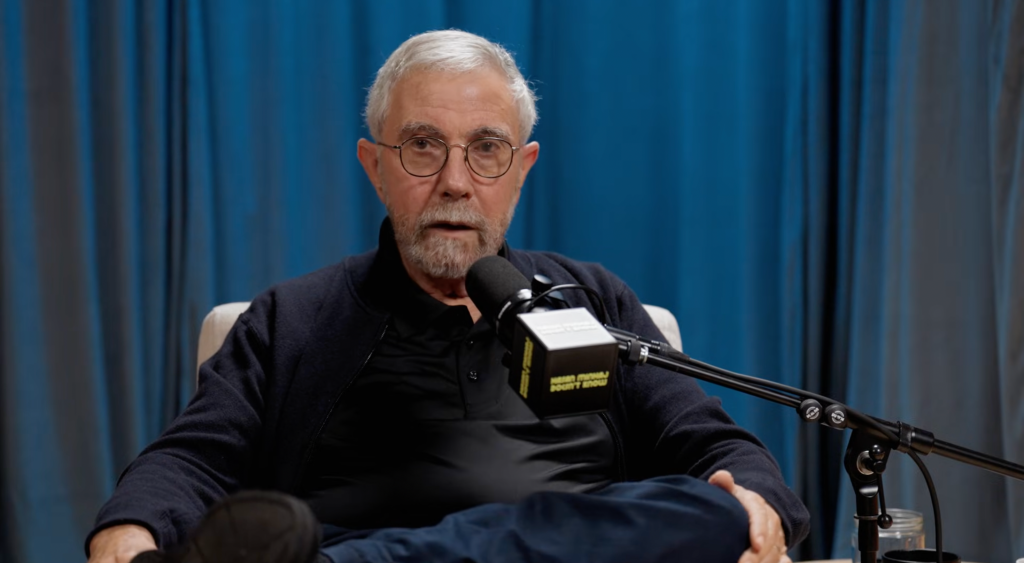
When Hasan Minhaj asked Nobel Prize-winning economist Paul Krugman whether voters should believe politicians who promise to “bring prices down,” Krugman was blunt.
“Any politician who promises to bring prices way down is either ignorant or lying, or both,” he said on Minhaj’s podcast (1).
Must Read
- Real Estate: Thanks to Jeff Bezos, you can now become a landlord for as little as $100 — and no, you don’t have to deal with tenants or fix freezers. Here’s how
- Retirement: Dave Ramsey warns nearly 50% of Americans are making 1 big Social Security mistake — here’s what it is and 3 simple steps to fix it ASAP
- Investing: Warren Buffett used 8 solid, repeatable money rules to turn $9,800 into a $150B fortune. Start using them today to get rich (and stay rich)
It’s a blunt warning aimed squarely at the kind of sweeping affordability pledge Donald Trump has made central to his political brand.
What Krugman is really saying about prices
In the Minhaj interview, Krugman walks through a basic but often-misunderstood point: prices rarely go down — and usually shouldn’t.
He notes that outside of rare and painful episodes, such as the Great Depression, countries like the U.S. experience inflation, not deflation. Central banks, including the Federal Reserve, deliberately target a low, positive inflation rate of about 2% a year (2). The economy tends to function better with slowly rising prices than with flat or falling prices.
Deflation, Krugman reminds viewers, is “a terrible thing”. It’s associated with deep slumps, debt crises and lost decades.
Crucially, the Fed steers the overall price level. A committee of central bankers sets interest rates and manages the money supply largely independent of the White House.
When a candidate promises to “rapidly drive prices down” everywhere from groceries to homes, Krugman argues they’re either oversimplifying something they don’t understand, or banking on the fact that voters don’t.
Read More: No time to lower your crippling car insurance rate? Here’s how to do it within minutes — you could end up paying $29/month without a single phone call
Trump’s big promises vs. stubborn bills
Congressman Lloyd Doggett’s “Trump’s Economic Promises Timeline” (3) collects just how far Trump has gone on affordability rhetoric.
Among the highlights:
- Under my administration, we will be slashing energy and electricity prices by half within 12 months, at a maximum of 18 months,” PBS NewsHour, Trump rally in North Carolina (August 14, 2024). (4)
- “While working Americans catch up, we are going to put a temporary cap on credit card interest rates at 10%. People are being made to pay 25%. Temporary ban.” Speech: Donald Trump campaign rally in Erie, Pennsylvania (September 29, 2024). (5)
- “A vote for Trump means your groceries will be cheaper.” President Trump campaigns in Pittsburgh. (6)
Once back in office, Trump largely shelved the “make America affordable again” slogan — until recent elections (7), where Democrats over-performed, and affordability emerged as a top issue.
The White House is trying to pivot. According to a recent NPR report (8), Trump has resumed promising to “lower the cost of living” and will travel across the country to tout his plan. Polls show (9) voters blame his policy for making the economy worse.
The numbers help explain why voters are unconvinced. Inflation has run around 3% this year (10). It’s far from the double-digit spikes of the 1970s, but still enough to keep everyday prices marching higher.
Some items are cheaper than when Trump returned to office, but others — such as coffee and ground beef — remain significantly more expensive (11).
What households can actually do about affordability?
If sweeping political promises are unlikely to deliver cheap groceries and rent, what can Americans do to protect themselves?
Economists and financial planners tend to come back to a few practical themes:
- Audit your spending: Go line by line through a month or two of bank and credit card statements. Identify subscriptions, fees and impulse categories you genuinely wouldn’t miss, and cut or downgrade them first.
- Attack high-interest debt: Credit card APRs in the 20 to 30% range are one of the most punishing ways inflation shows up in daily life. Prioritizing high-interest debts often delivers the most significant “return” on any extra dollar you can free up.
- Build a small cash buffer: Even a modest emergency fund can keep a surprise bill from turning into new high-interest debt the next time a car repair or medical co-pay hits.
- Inflation-proof your long-term savings: Steer savings toward diversified stock or index funds, which historically have outpaced inflation over long periods.
- Invest in earning power: Training, certifications or skills that allow you to move into higher-paying roles are one of the few ways to beat rising prices over a lifetime.
In an economy built around steady inflation, the most realistic path is to find ways to keep your income, savings and debt management ahead of the slow, relentless rise.
What to read next
- Dave Ramsey says this 7-step plan ‘works every single time’ to kill debt, get rich — and ‘anyone’ can do it
- Robert Kiyosaki says this 1 asset will surge 400% in a year — and he begs investors not to miss its ‘explosion’
- Even in a choppy market, young millionaires are betting big on these asset classes — and older Americans should take note
- I’m almost 50 years old and have nothing saved for retirement. What do I do? Don’t panic. Here are 6 easy ways to catch up (and fast)
Join 200,000+ readers and get Moneywise’s best stories and exclusive interviews first — clear insights curated and delivered weekly. Subscribe now.
Article sources
We rely only on vetted sources and credible third-party reporting. For details, see our editorial ethics and guidelines.
YouTube (1); Webull (2); Lloyd Doggett (3); YouTube (4); Roll Call (5); C-SPAN (6); Prairie Public Newsroom (7); NPR (8); LAist (9); Trading Economics (10); WPRL (11)
This article provides information only and should not be construed as advice. It is provided without warranty of any kind.