
This article adheres to strict editorial standards. Some or all links may be monetized.
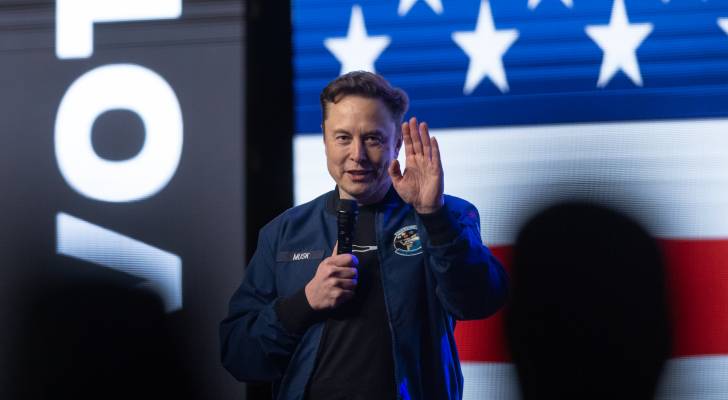
America’s ballooning debt burden has become impossible to ignore — and Tesla CEO Elon Musk, who took a stab at tackling government waste earlier this year, is sounding the alarm again.
Must Read
- Thanks to Jeff Bezos, you can now become a landlord for as little as $100 — and no, you don’t have to deal with tenants or fix freezers. Here’s how
- Dave Ramsey warns nearly 50% of Americans are making 1 big Social Security mistake — here’s what it is and 3 simple steps to fix it ASAP
- No time to lower your crippling car insurance rate? Here’s how to do it within minutes — you could end up paying $29/month without a single phone call
On a recent episode of “The Joe Rogan Experience” podcast, Musk outlined what he believes is — and isn’t — possible when it comes to fixing the U.S. national debt crisis.
“You can make it directionally better, but ultimately you can’t fully fix the system,” Musk said. “Unless you could go super draconian — like Genghis Khan level on cutting waste and fraud — which you can’t really do in an aspirationally democratic country, then there’s no way to solve the debt crisis.” (1)
Musk called the debt “insane” — and the numbers support his concern. U.S. federal debt has now surpassed $38 trillion and continues to climb.
But what really set off alarm bells for Musk wasn’t just the total — it was the cost of servicing it.
“The interest payments on the debt exceed our entire military budget … that was one of the wake up calls for me … this is crazy,” he said.
He’s not wrong. Treasury data shows the U.S. government spent $970 billion on net interest in fiscal year-to-date 2025 — more than the $917 billion spent on national defense.
Musk’s conclusion? Spending cuts alone won’t solve it.
“Even if you implement all these savings, you’re only delaying the day of reckoning for when America goes bankrupt,” he said. “So I came to the conclusion that the only way to get us out of the debt crisis and to prevent America from going bankrupt is AI and robotics. We need to grow the economy at a rate that allows us to pay off our debt.”
Musk isn’t the only one sounding alarms over America’s debt — or, more specifically, the soaring interest costs tied to it. Ray Dalio, founder of the world’s largest hedge fund, Bridgewater Associates, has warned that the U.S. is heading toward a “debt death spiral,” where the government must borrow simply to pay interest — a vicious cycle that feeds on itself.
But unlike Musk, Dalio doesn’t foresee a formal bankruptcy.
“There won’t be a default — the central bank will come in and we’ll print the money and buy it,” he said. “And that’s where there’s the depreciation of money.”
In other words, the government may never technically run out of dollars — but those dollars can lose value fast.
As the hosts of the “Words & Numbers” podcast put it: “Technically speaking, the government can’t go bankrupt because it only promised to hand over a certain number of dollars; it didn’t promise what the value of those dollars would be. (2)
Because the value of the dollars was never specified, the government can print enough to render the dollars nearly worthless. To the rest of us, the effect is the same as the government going bankrupt.”
Many economists share that concern: high debt levels can fuel inflation, eroding the dollar’s purchasing power — something Americans are already experiencing. (3) According to the Federal Reserve Bank of Minneapolis, $100 in 2025 has the same buying power as $12.05 did in 1970. (4)
The good news? Savvy investors have long found ways to protect their wealth — regardless of Washington’s fiscal missteps.
A safe-haven shines again
To shock-proof your investments, Dalio emphasized the value of diversification — and highlighted one time-tested asset in particular.
“People don’t have, typically, an adequate amount of gold in their portfolio,” he said. “When bad times come, gold is a very effective diversifier.”
Gold is considered a go-to safe haven. It can’t be printed out of thin air like fiat money and because it’s not tied to any single country, currency or economy, investors flock to it during periods of economic turmoil or geopolitical uncertainty, driving up its value.
Dalio noted that central banks themselves are “acquiring gold now as a diversifier” — and says it’s “prudent” for individuals to consider allocating “somewhere between 10% or 15%” of their portfolios to the precious metal.
The market’s performance has reinforced that view. Even with a recent pullback, gold prices are still up more than 45% over the past year.
Other prominent voices see further potential. JPMorgan CEO Jamie Dimon recently said that in this environment, gold can “easily” rise to $10,000 an ounce.
One way to invest in gold that also provides significant tax advantages is to open a gold IRA with the help of Priority Gold.
Gold IRAs allow investors to hold physical gold or gold-related assets within a retirement account, thereby combining the tax advantages of an IRA with the protective benefits of investing in gold, making it an option for those looking to help shield their retirement funds against economic uncertainties.
When you make a qualifying purchase with Priority Gold, you can receive up to $10,000 in precious metals for free.
Read more: Warren Buffett used 8 simple money rules to turn $9,800 into a stunning $150B — start using them today to get rich (and then stay rich)
Musk’s advice
Musk has also shared thoughts on how individuals can protect themselves when the dollar is losing value.
“As a general principle, for those looking for advice from this thread, it is generally better to own physical things like a home or stock in companies you think make good products, than dollars when inflation is high,” he wrote on X back in 2022 — shortly before U.S. inflation spiked to a 40-year high. (5)
Musk had a point about “physical things like a home.” Consider this: the S&P Cotality Case-Shiller U.S. National Home Price NSA Index has climbed by 47% over the past five years. (6)
In fact, real estate is known as a classic hedge against inflation. As the cost of materials, labor and land rises, home values often increase in tandem. Rental income also tends to move higher, providing landlords with a cash flow that adjusts with inflation.
These days, you don’t need to buy a house outright to benefit from real estate investing. Crowdfunding platforms like Mogul offer an easier way to get exposure to this income-generating asset class.
Mogul is a real estate investment platform offering fractional ownership in blue-chip rental properties, which gives investors monthly rental income, real-time appreciation and tax benefits — without the need for a hefty down payment or 3 A.M. tenant calls.
Founded by former Goldman Sachs real estate investors, the team hand-picks the top 1% of single-family rental homes nationwide for you. Simply put, you can invest in institutional quality offerings for a fraction of the usual cost.
Each property undergoes a vetting process, requiring a minimum 12% return even in downside scenarios. Across the board, the platform features an average annual IRR of 18.8%. Their cash-on-cash yields, meanwhile, average between 10 to 12% annually. Offerings often sell out in under three hours, with investments typically ranging between $15,000 and $40,000 per property.
Every investment is secured by real assets, not dependent on the platform’s viability. Each property is held in a standalone Propco LLC, so investors own the property — not the platform.
Getting started is a quick and easy process. You can sign up for an account and then browse available properties. Once you verify your information with their team, you can invest like a mogul in just a few clicks.
‘Stock in companies’
Musk also highlighted “stock in companies you think make good products” as a smarter alternative to holding cash when inflation is high.
That idea resonates with many seasoned investors — but it naturally raises a question: how do you choose the right companies?
One of the world’s most respected investors, Warren Buffett, offers a straightforward answer: skip the stock picking and simply own the S&P 500.
“In my view, for most people, the best thing to do is own the S&P 500 index fund,” Buffett has famously stated. (7)
This approach gives investors exposure to 500 of America’s largest companies across a wide range of industries, providing instant diversification without the need for constant monitoring or active management.
The beauty of this approach is its accessibility — anyone, regardless of wealth, can take advantage of it. Even small amounts can grow over time with tools like Acorns, a popular app that automatically invests your spare change.
Signing up for Acorns takes just minutes: link your cards and Acorns will round up each purchase to the nearest dollar, investing the difference — your spare change — into a diversified portfolio.
With Acorns, you can invest in an S&P 500 ETF with as little as $5 — and, if you sign up today, Acorns will add a $20 bonus to help you begin your investment journey.
A finer alternative
It’s easy to see why great works of art tend to appreciate over time. Supply is limited and many famous pieces have already been snatched up by museums and collectors. That scarcity also makes art an attractive option for investors looking to diversify and preserve wealth during periods of high inflation.
In 2022, a collection of art owned by the late Microsoft co-founder Paul Allen sold for $1.5 billion at Christie’s New York, making it the most valuable collection in auction history. (8)
Investing in art was traditionally a privilege reserved for the ultra-wealthy.
Now, that’s changed with Masterworks — a platform for investing in shares of blue-chip artwork by renowned artists, including Pablo Picasso, Jean-Michel Basquiat and Banksy. It’s easy to use and with 23 successful exits to date, every one of them has been profitable thus far.
Simply browse their impressive portfolio of paintings and choose how many shares you’d like to buy. Masterworks will handle all the details, making high-end art investments both accessible and effortless.
Masterworks has distributed roughly $61 million back to investors. New offerings have sold out in minutes, but you can skip their waitlist here. See important Regulation A disclosures at Masterworks.com/cd
What To Read Next
- Robert Kiyosaki says this 1 asset will surge 400% in a year — and he begs investors not to miss its ‘explosion’
- I’m almost 50 and have nothing saved for retirement — what now? Don’t panic. These 6 easy steps can help you turn things around
- Dave Ramsey says this 7-step plan ‘works every single time’ to kill debt, get rich in America — and that ‘anyone’ can do it
- 22 US states are now in a recession or close to it — protect your savings with these 10 essential money moves ASAP
Join 200,000+ readers and get Moneywise’s best stories and exclusive interviews first — clear insights curated and delivered weekly. Subscribe now.
Article sources
We rely only on vetted sources and credible third-party reporting. For details, see our editorial ethics and guidelines.
@joerogan (1); US News (2); PBS (3); Federal Reserve Bank of Minneapolis (4); @elonmusk (5); S&P Global (5); CNBC (6); Christie’s (7)
This article provides information only and should not be construed as advice. It is provided without warranty of any kind.