
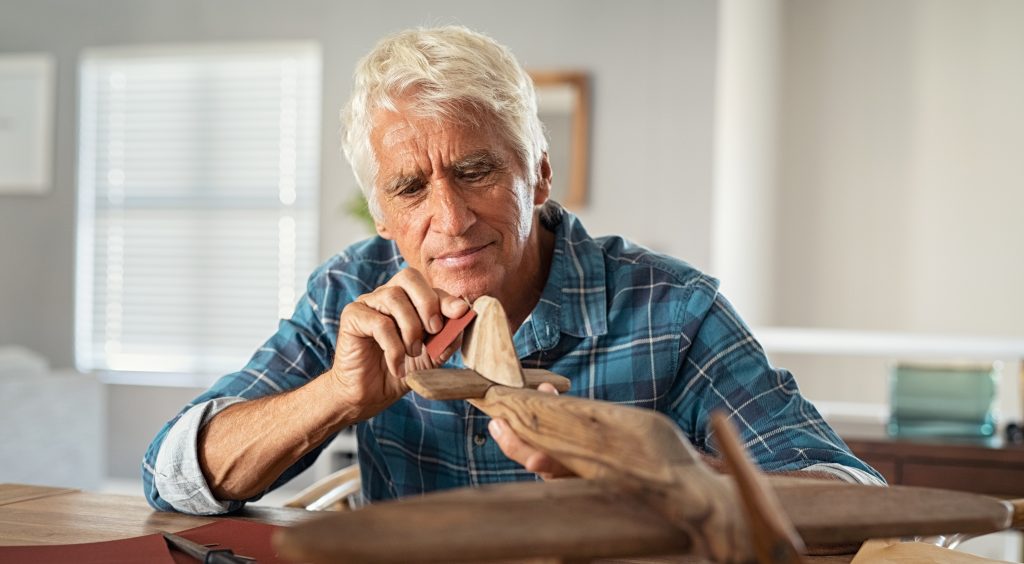
Marcus spent the first six months of retirement dreaming about what he’d do “once he had the time.” But when that time finally arrived, the dreams never quite materialized. Now 69, he fills his days with household repairs, reading old mystery novels and golfing with friends,
His wife, Lila, has just retired at 67, and is brimming with ideas for how to use this next chapter: a hiking trip through the Pacific Northwest, enrolling in online anthropology courses, even joining a local rowing club. She wants to be more adventurous.
Must Read
- Thanks to Jeff Bezos, you can now become a landlord for as little as $100 — and no, you don’t have to deal with tenants or fix freezers. Here’s how
- Robert Kiyosaki says this 1 asset will surge 400% in a year — and he begs investors not to miss its ‘explosion’
- Dave Ramsey warns nearly 50% of Americans are making 1 big Social Security mistake — here’s what it is and 3 simple steps to fix it ASAP
Now that they’re finally in retirement together, the gap between their visions feels wider than she expected. Lila doesn’t want to drag Marcus along on her bucket-list goals. But she also doesn’t want to spend this chapter living separate lives under the same roof.
So how do couples like Lila and Marcus get aligned, especially when only one spouse seems motivated to plan?
Creating space for personal retirement dreams
Many couples assume retirement will naturally fall into place. But in reality? Plenty don’t end up on the same page. A national Ameriprise Financial survey found that one in four of married couples disagree on how much money they will spend on hobbies and travel in retirement (1).
Some realistic trial steps include: a one-time local day trip instead of a full vacation, a three-session beginner class instead of a full course, a weekly breakfast outing to encourage shared routines or trying a new hobby together for just a month before committing
Little experiments create momentum and shared memories that can gently move a hesitant spouse out of autopilot.
Why some retirees struggle to find purpose
Marcus’s “go-with-the-flow” approach is more common than many couples realize.
Research published in Aging International highlights that loss of structure and purpose is one of the biggest psychological challenges newly retired Americans face. When work once provided a built-in identity, it can take months or years to figure out what fills that void.
A spouse can play a meaningful role in helping the other rediscover their drive. The key is curiosity, not pressure.
Lila might start by exploring questions such as:
- “What activities made you lose track of time when you were younger?”
- “What did you always say you’d try ‘once you had the time’?”
- “Which parts of your old job did you actually enjoy? Problem-solving? Creativity? Mentoring?”
If Marcus once loved making model ships, they might tour a local maker space together. If he enjoyed mentoring, he could consider volunteering with students or new retirees. If he lights up when talking about the outdoors, maybe a beginner’s birdwatching class would spark something.
The goal isn’t to manufacture purpose for him, it’s to create opportunities for him to rediscover it.
Trending: Approaching retirement with no savings? Don’t panic, you’re not alone. Here are 6 easy ways you can catch up (and fast)
When compromise isn’t the answer (yet)
Some retirees try to force a compromise too early, pushing the reluctant spouse to “just pick something,” while the enthusiastic spouse scales back their excitement to keep the peace.
But compromise shouldn’t be the starting point.
Research on goal-setting among older adults shows that people are far more engaged when they choose activities based on intrinsic motivation, not because their spouse suggested it, and not because it seems like the “right” retirement plan.
So if Marcus isn’t ready to choose a long-term goal, Lila doesn’t need to wait. Experts often advise to pursue personal goals without guilt, share experiences without expecting reciprocation, let excitement be contagious, not coercive and celebrate even small steps your partner takes.
Sometimes one spouse becomes the spark that slowly lights the other’s motivation.
A new chapter doesn’t have to look identical
Retirement isn’t meant to be a perfectly matched set of hobbies. It’s meant to be a life stage where both partners explore what makes them feel alive.
Lila can follow her sense of adventure. Marcus can take time to find what inspires him. And with honest conversations, small experiments and steady encouragement, the two can shape a rhythm that honors both personalities.
What to read next
- Grant Gardone reveals the ‘real problem’ with US real estate (and what average Americans must actually do to get rich)
- Warren Buffett used 8 solid, repeatable money rules to turn $9,800 into a $150B fortune. Start using them today to get rich (and stay rich)
- Dave Ramsey says this 7-step plan ‘works every single time’ to kill debt, get rich — and ‘anyone’ can do it
- 22 US states are already in a recession — protect your savings with these 10 essential money moves ASAP
Join 200,000+ readers and get Moneywise’s best stories and exclusive interviews first — clear insights curated and delivered weekly. Subscribe now.
Article sources
We rely only on vetted sources and credible third-party reporting. For details, see our editorial ethics and guidelines.
Ameriprise (1); Ageing International (2); Age and Ageing (3)
This article provides information only and should not be construed as advice. It is provided without warranty of any kind.