
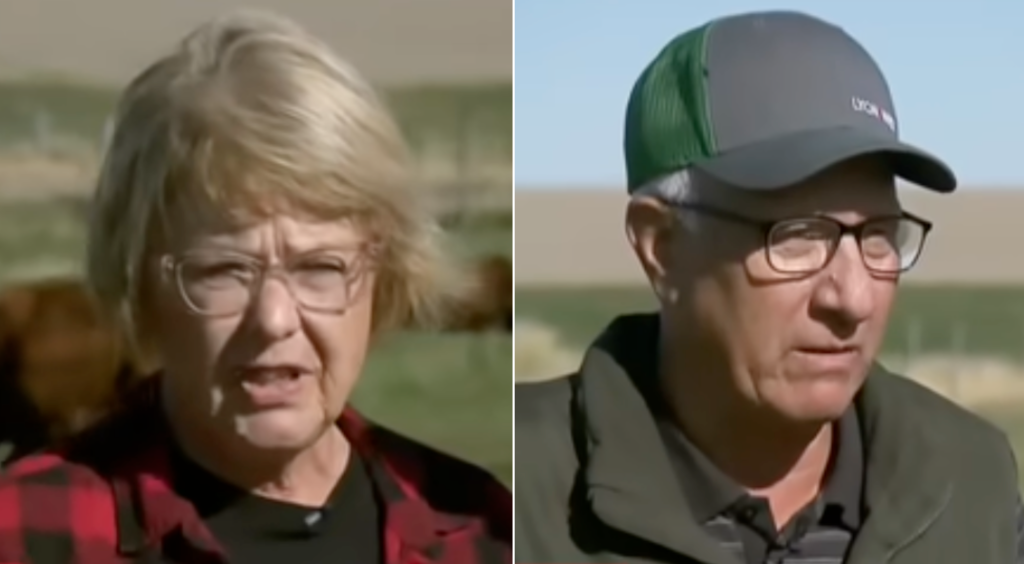
Iowa family farmers Pete and Burleen Wobeter thought things might be looking up for their cattle business this year. With their corn and soybean crops facing an uncertain market, the soaring beef prices felt like a potential lifeline.
But when President Trump announced his intention to quadruple beef imports from Argentina in an effort to “bring our beef prices down” and help a “very good ally,” the Wobeters were shocked (1).
Must Read
- Thanks to Jeff Bezos, you can now become a landlord for as little as $100 — and no, you don’t have to deal with tenants or fix freezers. Here’s how
- Dave Ramsey warns nearly 50% of Americans are making 1 big Social Security mistake — here’s what it is and 3 simple steps to fix it ASAP
- Robert Kiyosaki says this 1 asset will surge 400% in a year — and he begs investors not to miss its ‘explosion’
The news of increased beef imports from Argentina sent cattle prices plummeting in the U.S (2). And for American farmers like the Wobeters, an increase in cattle imports seems like another blow to their financial prospects.
The Trump administration has since offered help in the form of $3 billion in aid to farmers and ranchers affected by the trade war (3), with potentially another $10 billion on the way. Most recently, President Trump reached a new agreement with China — public details are still sparse, but Trump told reporters that China will soon resume buying “tremendous amounts” of soybeans from the U.S. (4).
The potential tariff relief couldn’t come a moment sooner for American soybean farmers, even though it’s unclear how much relief they might see from this new deal. However, many are still wary that increased beef imports from Argentina will negatively impact their bottom line.
The impact that tariffs have on family farms
American family farms — especially those in the Midwest that grow corn, soybeans and cattle — are highly susceptible to the fluctuations of the market.
When China started pulling back on American soybean purchases and Trump gave the green light to increase beef imports from Argentina, many family farms found themselves caught between lost international markets and increased competition from imports. Despite the Trump administration’s repeated promises of ‘America first,’ the tariff policies seem to be undermining the financial stability of domestic farmers.
“In a misguided effort to lower the price of beef in grocery stores, President Trump said he plans to increase the volume of beef being imported from Argentina,” wrote the National Cattlemen’s Beef Association (NCBA) in an article on its website (5). “Efforts to manipulate markets only risk damaging the livelihoods of American cattlemen and women, while doing little to impact the price consumers are paying at the grocery store.”
The NCBA’s CEO, Colin Woodall, went on to encourage Trump to support the domestic cattle industry by investing in improved facilities, protecting the health of American cattle herds and “addressing the scourge of black vultures.”
According to Oklahoma State University, if the U.S. were to accept all of the projected beef exports from Argentina, it would only represent 2.5% of the total U.S. beef supply (6). That leaves most of the market open to American cattle ranchers.
But many American farmers, including the Wobeters, aren’t sure what might happen next. Without any of their crops finding a good market, it could spell trouble for the long-term viability of many American farming operations. As Burleen Wobeter told Face the Nation, “It feels like being a pawn in a game we’re not going to win (7)."
Meanwhile, American shoppers aren’t seeing relief at the grocery store. Instead, beef prices continue to be on the rise, with ground beef up 13% and steak up by 16% year over year (8).
Read more: I’m almost 50 and have nothing saved for retirement — what now? Don’t panic. These 6 easy steps can help you turn things around
Farmers and consumers are feeling the pinch
As tariffs and imports destabilize the markets for major crops, family farms are suffering. Unfortunately, there are no easy solutions due to the complex nature of trade policies and agreements. And in many cases, trade policies can send unintended ripple effects into the agricultural economy, ultimately impacting prices at the grocery store.
The instability has forced many American farmers to become more dependent on government aid instead of market income. Government bailouts aren’t a new concept to American farmers — the federal government has stepped in multiple times in the last couple of decades to subsidize farm income under difficult circumstances, according to USAFacts (9). But being caught in the middle of the current trade war will likely intensify financial concerns.
Even though wholesale cattle prices dropped recently, that may not push beef prices down at the grocery store. Beyond the tariff and import uncertainties, there are other factors that have been driving up the price of beef.
For starters, domestic cattle herds have been shrinking under drought conditions. Additionally, higher grain prices and labor supply shortages impacting ranches and slaughterhouses have also driven up the cost of beef (10).
The many factors that are putting upward pressure on beef prices don’t seem likely to dissipate any time soon, which means shoppers likely won’t see immediate relief at the grocery store.
What to read next
- Are you richer than you think? 5 clear signs you’re punching way above the average American’s wealth
- Dave Ramsey says this 7-step plan ‘works every single time’ to kill debt, get rich — and ‘anyone’ can do it
- This tiny hot Costco item has skyrocketed 74% in price in under 2 years — but now the retail giant is restricting purchase. Here’s how to buy the coveted asset in bulk
- 22 US states are now in a recession or close to it — protect your savings with these 5 essential money moves ASAP
Join 200,000+ readers and get Moneywise’s best stories and exclusive interviews first — clear insights curated and delivered weekly. Subscribe now.
Article sources
We rely only on vetted sources and credible third-party reporting. For details, see our editorial ethics and guidelines.
CBS News (1, 10); Business Insider (2); Federal News Network (3); USA Today (4); National Cattlemen’s Beef Association (5); Oklahoma State University Extension (6); Face the Nation (7); Voronoi (8); USAFacts (9)
This article originally appeared on Moneywise.com under the title: Iowa farmer feels like ‘a pawn’ in a losing game amid devastating blows from Chinese tariffs, Argentinian beef imports
This article provides information only and should not be construed as advice. It is provided without warranty of any kind.