
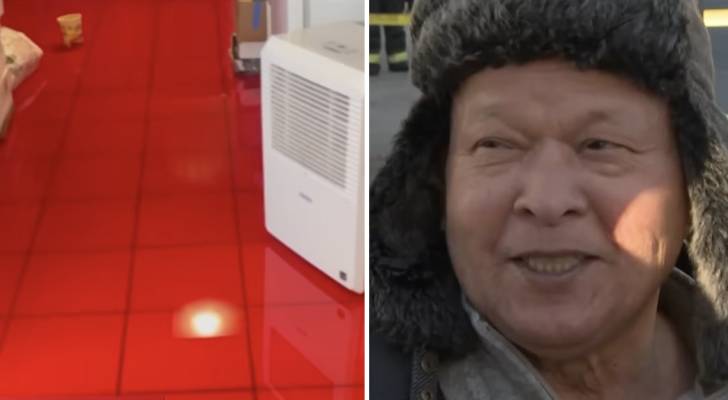
Dang Nguyen wasn’t expecting a delivery that morning, especially not one that would leave his Medford, Massachusetts home smelling like a fuel depot.
But when his wife and brother-in-law caught a whiff of fumes drifting up from the basement, they realized something was very wrong.
Must Read
- Real Estate: Thanks to Jeff Bezos, you can now become a landlord for as little as $100 — and no, you don’t have to deal with tenants or fix freezers. Here’s how
- Retirement: Dave Ramsey warns nearly 50% of Americans are making 1 big Social Security mistake — here’s what it is and 3 simple steps to fix it ASAP
- Investing: Warren Buffett used 8 solid, repeatable money rules to turn $9,800 into a $150B fortune. Start using them today to get rich (and stay rich)
It wasn’t a package gone astray. It was 385 gallons of home-heating oil, mistakenly pumped straight into the Nguyens’ basement by a Fawcett Energy driver who showed up not just at the wrong house, but the wrong city.
The delivery was meant for 48 Linwood Street in Malden. Instead, the truck was parked outside 48 Linwood Street in Medford, where Nguyen lives.
"The oil delivery driver pulled up to the wrong address, put 385 gallons of oil into a basement with no oil tank," Medford Deputy Fire Chief Nicholas Davis told CBS News Boston.
Now the Nguyen family has been evacuated and early estimates suggest cleanup and repairs could run as high as $200,000.
A spill that won’t stay contained
Fire officials say the oil didn’t just pool. It spread across the entire basement floor, raising fears it could seep into the ground beneath the home. Nguyen’s home still has an exterior oil fill connection in the same spot where delivery hoses attach, but he removed his oil tank five years ago after switching to gas heat.
Davis noted that a standard home delivery typically ranges from 150 to 250 gallons.
"Normally when you are filling up an oil tank, once it starts to get full you hear the whistle and that keys the driver to shut down the oil. But there is no whistle because there is no tank,” Davis said.
Oil spills like this are unusual, but the ripple effects are anything but small. Beyond the chaos of cleanup, contamination can drag down property values for years.
After the 2010 Deepwater Horizon explosion, the largest offshore oil spill in U.S. history, a 2019 Journal of Housing Economics study found home prices in the region fell 4% to 8%, with losses lasting through 2015. The researchers estimated the disaster wiped out $3.8 billion to $5 billion in housing value.
Massachusetts isn’t new to these risks. More than 650,000 homes in the state still rely on oil heat, yet only 7% of those households carry the specialized insurance that would help cover cleanup costs if a tank leaks or oil spills into the ground.
Read more: Robert Kiyosaki says this 1 asset will surge 400% in a year — and he begs investors not to miss its ‘explosion’
A small rider that protects you from a massive bill
For Nguyen, the timing couldn’t be worse. He was preparing to host 20 people for Thanksgiving, a holiday now overshadowed by hazardous fumes, cleanup crews and a question mark hanging over who is footing the bill. And cleanup is only the beginning.
Once a family is displaced, the real costs start piling up fast, from hotel stays to scrambling for longer-term housing.
In Massachusetts, where the average rent sits around $2,900, about 45% higher than the national average, even a short-term move can feel financially crushing. For a family of six like the Nguyens, the price tag only climbs. A three-bedroom apartment in the state now averages $3,400 a month, according to Zillow.
Kevin Hoag, the president of CommTank, which specializes in tank installations, removals and maintenance, says there’s no quick fix.
"It’s repairable," Hoag told CBS News Boston. "They’ll get through it and put it behind them, and worst case, there are a couple months ahead (and) some extra headaches."
Massachusetts logs several oil spill-related incidents each year. And when they happen, homeowners without specialized coverage can be left staring at the cleanup bills.
The fix, however, is affordable. An Escaped Liquid Fuel Endorsement, the rider that covers home oil tank leaks, environmental damage and liability, typically costs $100 or less. For many households, it’s one of the cheapest forms of protection they’ll ever add to a policy.
And if a contractor ever damages your home, your homeowners insurance may help cover repairs, but your insurer will likely seek reimbursement from the contractor’s insurer. That’s why the Insurance Information Institute recommends asking contractors to verify their coverage before the work begins. If they won’t, consider hiring someone who will.
For now, the Massachusetts Department of Environmental Protection and a local building inspector are investigating what went wrong, and the family is receiving temporary assistance from the Red Cross.
What to read next
- ‘Hold onto your money’: Jeff Bezos issued a warning to rethink buying a ‘new automobile, refrigerator, or whatever’ — does it hold true today?
- Dave Ramsey says this 7-step plan ‘works every single time’ to kill debt, get rich — and ‘anyone’ can do it
- I’m almost 50 years old and have nothing saved for retirement. What do I do? Don’t panic. Here are 6 easy ways to catch up (and fast)
- 22 US states are already in a recession — protect your savings with these 10 essential money moves ASAP
Join 200,000+ readers and get Moneywise’s best stories and exclusive interviews first — clear insights curated and delivered weekly. Subscribe now.
Article sources
We rely only on vetted sources and credible third-party reporting. For details, see our editorial ethics and guidelines.
CBS News (1); Science Direct (2); WGBH (3); Zillow (4); CommTank (5); AllState (6); III (7).
This article provides information only and should not be construed as advice. It is provided without warranty of any kind.