
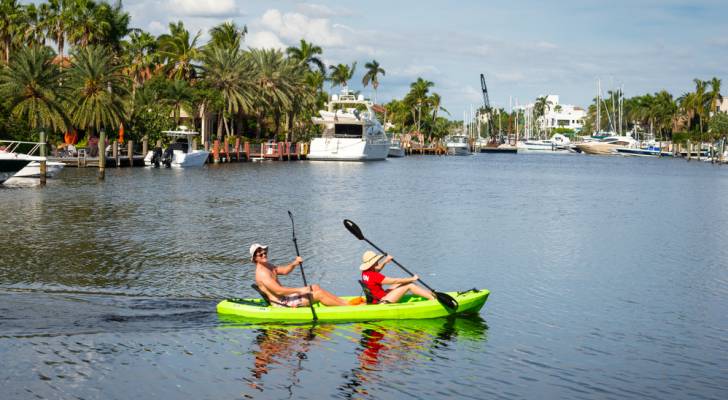
Seven years from retirement, Ellen and Charlie face a tempting choice: buy a Florida vacation home now, or wait until their finances are more secure.
On the surface, the idea seems idyllic. The couple, both in their late 50s, dream of escaping harsh winters and creating a legacy property they can one day pass on to their only daughter. But the timing is complicated. Their primary mortgage still has $120,000 outstanding, and while they’ve saved $400,000 toward retirement, their nest egg will need to stretch across decades.
Their dream is emotionally charged. The couple picture family holidays under the palm trees, and their daughter inheriting not just a home but cherished memories. Yet lurking beneath is the fear of regret: what if this vacation property undermines the retirement security they’ve worked so hard to build?
This is a common crossroads for pre-retirees. According to the Center for Retirement Research at Boston College, 39% of working-age households today won’t be able to maintain their current living standard during retirement [1]. That potentially makes a vacation home not just an escape, but another financial obligation.
Must Read
- Thanks to Jeff Bezos, you can now become a landlord for as little as $100 — and no, you don’t have to deal with tenants or fix freezers. Here’s how
- I’m 49 years old and have nothing saved for retirement — what should I do? Don’t panic. Here are 6 of the easiest ways you can catch up (and fast)
- Dave Ramsey warns nearly 50% of Americans are making 1 big Social Security mistake — here’s what it is and 3 simple steps to fix it ASAP
The motives vs. the risks
Buying a second property before retirement has a clear emotional appeal, but it also creates significant financial risk for the couple, as they are considering a second mortgage before their first is paid.
Even if Ellen and Charlie rent their Florida home part-time, that rental income isn’t guaranteed to offset the costs. Local rules on short-term rentals could change, or demand could drop. Florida has seen municipalities increasingly crack down on short-term rentals with stricter regulations, higher taxes, fines and permit requirements [2].
Another risk is assuming the housing market will strengthen. Currently, Florida buyers have leverage and market cycles are unpredictable. If prices soften just as the couple retires, they could find themselves holding an asset worth less than what they paid — an especially painful outcome if they’re forced to sell during a downturn.
Read more: Robert Kiyosaki warns of a ‘Greater Depression’ coming to the US — with millions of Americans going poor. But he says these 2 ‘easy-money’ assets will bring in ‘great wealth’. How to get in now
Will retirement savings be put in jeopardy?
With $400,000 saved, Ellen and Charlie have a healthy start, but experts often recommend that retirees have at least 10 times their income saved to comfortably cover expenses throughout retirement.
For a household earning $90,000 annually, that could mean closer to $1 million by retirement age. Adding the burden of a second mortgage may make it harder to reach that target.
Moreover, a 2024 study from Northwestern Mutual shows that Americans believe they will need a total of $1.46 million to retire comfortably [3]. Ellen and Charlie are far short of that goal.
Buying a second home also means diverting money away from safer, more flexible investments. If unexpected health issues or job loss arise before retirement, a vacation home would tie up funds in an illiquid asset.
Selling quickly could force the couple to accept a loss. If, say, they purchased a $350,000 property and had to sell during a downturn with values falling 10 to 15%, they could be out $35,000 to $50,000, not counting transaction costs.
Florida-specific costs they may not expect
A big factor that could affect the couple’s Florida home purchase is whether they rent it out before retirement. Many buyers assume that owning a vacation property means they can easily list it on Airbnb or Vrbo to offset mortgage costs. In Florida, however, short-term rental rules can vary drastically by jurisdiction.
For example, cities such as Miami Beach have cracked down on vacation rentals, with steep fines for operating without the proper license [4]. Other municipalities allow rentals but impose restrictions such as minimum-night stays, special permits or occupancy limits. Even HOAs often have their own rules, and many explicitly prohibit rentals under 30 days.
On top of that, the couple would need to register with the Florida Department of Business and Professional Regulation if they plan to rent the property for less than 30 days more than three times per year. Local jurisdictions may also require additional tourist development tax collection [5].
Ignoring these rules could not only cost them thousands in fines but also make it impossible to reliably rent the property when they need extra income.
Natural disaster costs
The couple also needs to weigh other Florida costs. Homeowners’ insurance in the state has skyrocketed, driven by hurricane risks and insurer withdrawals from the market. As of 2023, the average annual premium was more than $6,000, nearly four times the U.S. average [6].
Mortgage rates, currently hovering above 6.6% for a 30-year fixed loan, would add further strain.
Weather risks are another factor. Rising sea levels and stronger hurricanes mean the property may require costly maintenance, stormproofing or even long-term value erosion. What feels like a dream investment could become a liability if climate challenges intensify.
In all, Ellen and Charlie should reevaluate their plan with realistic numbers in mind for the costs and their budget. They may consider a vacation home in another area of the country with less risk associated, or they may realize that they need to focus on building their retirement savings — and opt to make memories at a rented property instead.
What to read next
- How much cash do you plan to keep on hand after you retire? Here are 3 of the biggest reasons you’ll need a substantial stash of savings in retirement
- There’s still a 35% chance of a recession hitting the American economy this year — protect your retirement savings with these 5 essential money moves ASAP
- This tiny hot Costco item has skyrocketed 74% in price in under 2 years — but now the retail giant is restricting purchase. Here’s how to buy the coveted asset in bulk
- Want an extra $1,300,000 when you retire? Dave Ramsey says this 7-step plan ‘works every single time’ to kill debt, get rich in America — and that ‘anyone’ can do it
Join 200,000+ readers and get Moneywise’s best stories and exclusive interviews first — clear insights curated and delivered weekly. Subscribe now.
Article sources
At Moneywise, we consider it our responsibility to produce accurate and trustworthy content people can rely on to inform their financial decisions. We rely on vetted sources such as government data, financial records and expert interviews and highlight credible third-party reporting when appropriate.
We are committed to transparency and accountability, correcting errors openly and adhering to the best practices of the journalism industry. For more details, see our editorial ethics and guidelines.
[1]. Center for Retirement Research. “Do we have a retirement crisis?”
[2]. Hostfully. “Guide to Florida’s short-term rental regulations”
[3]. Northwestern Mutual. “Americans believe they will need $1.46 million to retire comfortably according to Northwestern Mutual 2024 planning & progress study”
[4]. Goldwater Institute. “Will Miami Beach’s exorbitant short-term rental fines survive?”
[5]. Avantio. “Florida short-term rental laws 2025: What property managers need to know”
[6]. Office of Financial Research. “Wind, fire, water, hail: What is going on in the property insurance market and why does it matter?”
This article provides information only and should not be construed as advice. It is provided without warranty of any kind.