
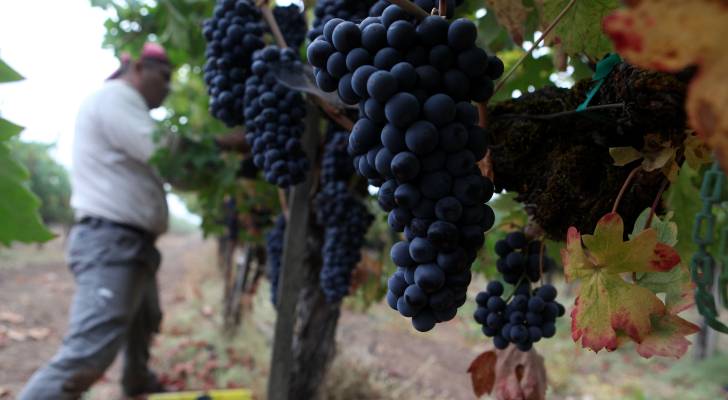
Wellness trends have turned “wine o’clock” into more of a water break.
Fewer Americans are reaching for a glass at the end of the day, leaving California grape growers with more supply than buyers. From Napa to San Diego, vineyards are being ripped out as consumption falls to its lowest point since the Prohibition era.
Must Read
- Thanks to Jeff Bezos, you can now become a landlord for as little as $100 — and no, you don’t have to deal with tenants or fix freezers. Here’s how
- Dave Ramsey warns nearly 50% of Americans are making 1 big Social Security mistake — here’s what it is and 3 simple steps to fix it ASAP
- ‘Rich Dad, Poor Dad’ author Robert Kiyosaki says this 1 asset will surge 400% in a year — and he begs investors not to miss its ‘explosion’
Gallup reports [1] 54% of U.S. adults now say they drink alcohol, down from more than 62% in 2023. Winemakers like Nicholson Ranch’s Deepak Gulranjani say the oversupply is squeezing the industry.
"Sometimes, there can be economic issues like what’s happening right now,” Gulranjani told KTVU [2]. “From what I read all around California, there’s overproduction because there’s less demand, people are pulling out vineyards." For younger generations, who are more likely to choose a mocktail over a Merlot, price may be another reason they’re skipping the bottle.
Uncorking a new pain
California’s grape harvest was about 25% lower than in 2023, and this year’s demand isn’t looking much better.
“Last year, in 2024, there were a lot of grapes, including in Napa and Sonoma, that some people did not harvest. It’s probably going to be true in 2025 as well,” Gulranjani said.
The issue goes beyond vines aging out, plant disease or routine replanting. Economic pressures are making a tough season even harder. On August 1, the U.S. imposed new tariffs on more than 90 countries. The European Union’s levy jumped from 10% to 15% — a 50% increase overnight.
Industry groups warn that the higher fees could wipe out more than 25,000 U.S. jobs and $2 billion in sales. For consumers, that means one thing: higher prices at the checkout.
“The tariffs will make every sip of wine more expensive,” Kyle Davidson, wine and beverage director of Day Off Group, told Wine Enthusiast [3]. “If importers have to pay more, they will charge more. If demand increases for domestic supply, that will increase prices as well.”
Take Whispering Angel Rosé, a popular French label that retails for about $20. With a 15% tariff tacked on, that poolside staple could climb to $23 or more, making it a tougher sell for budget-conscious drinkers.
Read more: Want an extra $1,300,000 when you retire? Dave Ramsey says this 7-step plan ‘works every single time’ to kill debt, get rich in America — and that ‘anyone’ can do it
Not the only industry feeling the squeeze
California’s wine market has gotten so rough that some vintners are pulling out vines rather than letting grapes wither. Even so, as many as 100,000 tons of fruit could go unharvested this year.
And wine isn’t the only one nursing a hangover. Canada [4], once one of the biggest buyers of U.S. alcohol, imported $1.1 billion worth of American spirits last year. Now, in retaliation for tariffs, Ontario, Quebec and Alberta have cut off purchases altogether.
Meanwhile, Kentucky bourbon is also feeling the burn. Sales of Brown-Forman’s Woodford Reserve, Old Forester and Coopers’ Craft are down 5%. Campari’s Wild Turkey fell 8% and Diageo’s Bulleit slipped 7%.
Tariffs aren’t the only pickling agent. Pandemic-era overproduction, inflation and shifting tastes are all reshaping how people spend. For many, $10 on a morning matcha feels more worthwhile than pouring a glass of cabernet or bourbon at night.
Sip smart
Wine lovers may want to brace for sticker shock. California growers are facing lower harvests, and at the same time, those new U.S. tariffs are raising costs on imported bottles.
Put together, shrinking supply and higher fees create the perfect recipe for higher prices at the store or restaurant.
That doesn’t mean you have to give up your evening glass. One way to soften the blow is by shopping local: look for smaller domestic labels that may still be competitively priced compared to imported favorites.
Buying directly from wineries or wine clubs, or even exploring lesser-known regions, can also deliver better value. And if you’re loyal to a particular imported brand, it may be worth stocking up now before the next round of potential price hikes.
What to read next
- Ultra-rich Americans are ditching stocks and real estate, says this investing legend — 5 assets they’re using to shockproof their millions
- I’m 49 years old and have nothing saved for retirement — what should I do? Don’t panic. Here are 6 of the easiest ways you can catch up (and fast)
- There’s still a 35% chance of a recession hitting the American economy this year — protect your retirement savings with these 5 essential money moves ASAP
- This tiny hot Costco item has skyrocketed 74% in price in under 2 years — but now the retail giant is restricting purchase. Here’s how to buy the coveted asset in bulk
Join 200,000+ readers and get Moneywise’s best stories and exclusive interviews first — clear insights curated and delivered weekly. Subscribe now.
Article sources
At Moneywise, we consider it our responsibility to produce accurate and trustworthy content that people can rely on to inform their financial decisions. We rely on vetted sources such as government data, financial records and expert interviews and highlight credible third-party reporting when appropriate.
We are committed to transparency and accountability, correcting errors openly and adhering to the best practices of the journalism industry. For more details, see our editorial ethics and guidelines.
[1]. Gallup. “U.S. Drinking Rate at New Low as Alcohol Concerns Surge”
[2]. KTVU. “Vintner’s choice: Rip up the vineyard or let grapes die on the vine?”
[3]. Wine Enthusiast. “The Trump Tariffs Are Officially in Effect—Here’s What it Means for Your Favorite Bottles”
This article provides information only and should not be construed as advice. It is provided without warranty of any kind.