
This article adheres to strict editorial standards. Some or all links may be monetized.
If you own a home and need money, a home equity line of credit (HELOC) allows you to borrow against your home’s equity, typically at a lower interest rate than other loan types. It can be a useful tool for disciplined borrowers facing a large expense. The potential downside is that you can lose your home, which is put up as collateral.
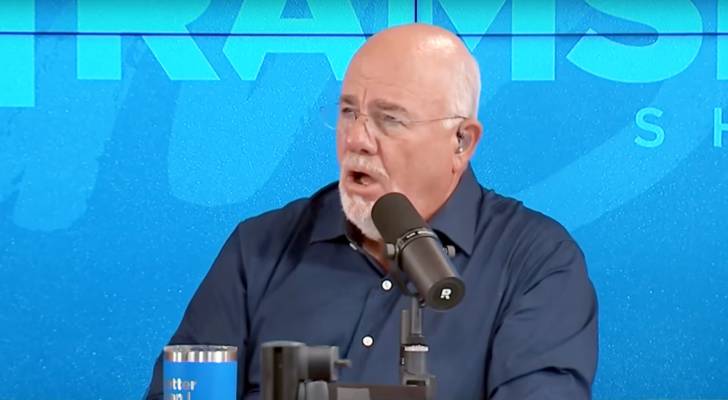
According to Dave Ramsey, a HELOC should be off the table when you have a net worth of $40 million.
Ashley from Columbus, Ohio, called into The Ramsey Show and told the namesake host she and her well-to-do husband were contemplating a HELOC on their vacation home to supplement their income on the advice of their financial advisor.
Must Read
- Thanks to Jeff Bezos, you can now become a landlord for as little as $100 — and no, you don’t have to deal with tenants or fix freezers. Here’s how
- Dave Ramsey warns nearly 50% of Americans are making 1 big Social Security mistake — here’s what it is and 3 simple steps to fix it ASAP
- No time to lower your crippling car insurance rate? Here’s how to do it within minutes — you could end up paying $29/month without a single phone call
“There’s no possible way that borrowing on your lake house is a good idea when you have $40 million,” Ramsey said in a clip posted on August 18. “I’m really disgusted at how pitiful your financial advisor is. This is just asinine.”
As it turns out, the couple’s money problems go far deeper than a quirky financial advisor.
Why a couple worth $40 million is looking to borrow money
Ashley explained that part of the problem is that approximately $30 million of the couple’s net worth is tied up in a business her husband co-owns. However, her husband isn’t on the board of directors and has no control over redemptions of shares. The board has been restrictive about redemptions, Ashley said, and the couple can’t freely access the money.
But that still leaves $10 million, Ramsey pointed out, so what’s the deal? Ashley revealed $4 million had been tucked away for retirement. She says that the remainder, and her husband’s estimated $400,000 in annual income, is not enough to support their lifestyle.
What type of lifestyle were they living? Apparently, the kind that includes maintaining two homes, house staff, a horse farm, chartered yachts and private jets. Ashley also alluded to alimony payments being made to an ex-wife. She admitted the couple spent upwards of $1.5 million in a year.
Ramsey said the answer to their problems, rather than borrowing money, was for the couple to learn to live within their (substantial) means.
“The last thing you people need to do is to go into debt by renting a yacht,” he insisted. “Cut your freaking lifestyle.”
It’s important to live within your means, no matter your income. In Ashley’s case, that could mean keeping both homes but traveling more frugally and keeping other costs down.
Tapping into tax-advantaged investment opportunities rather than your home equity might be a better way to grow your wealth. For instance, Ashley and her husband could consider investing in commercial real estate, which has major tax benefits, including the ability to depreciate the property’s value annually and list this amount as an expense on their property’s income statement – reducing their taxable income and leading to long-term tax savings.
Direct access to the $22.5 trillion commercial real estate sector has long been limited to a select group of elite investors — until now.
First National Realty Partners (FNRP) allows accredited investors to diversify their portfolio through grocery-anchored commercial properties, without taking on the responsibilities of being a landlord.
With a minimum investment of $50,000, investors can own a share of properties leased by national brands like Whole Foods, Kroger and Walmart, which provide essential goods to their communities. Thanks to Triple Net (NNN) leases, accredited investors are able to invest in these properties without worrying about tenant costs cutting into their potential returns.
Simply answer a few questions — including how much you would like to invest — to start browsing their full list of available properties.
Mogul is a real estate investment platform offering fractional ownership in blue-chip rental properties, which gives investors monthly rental income, real-time appreciation and tax benefits — without the need for a hefty down payment or 3 A.M. tenant calls.
Founded by former Goldman Sachs real estate investors, the team hand-picks the top 1% of single-family rental homes nationwide for you. Simply put, you can invest in institutional quality offerings for a fraction of the usual cost.
Each property undergoes a vetting process, requiring a minimum 12% return even in downside scenarios. Across the board, the platform features an average annual IRR of 18.8%. Their cash-on-cash yields, meanwhile, average between 10 to 12% annually. Offerings often sell out in under three hours, with investments typically ranging between $15,000 and $40,000 per property.
Every investment is secured by real assets, not dependent on the platform’s viability. Each property is held in a standalone Propco LLC, so investors own the property — not the platform. Blockchain-based fractionalization adds a layer of safety, ensuring a permanent, verifiable record of each stake.
Getting started is a quick and easy process. You can sign up for an account and then browse available properties. Once you verify your information with their team, you can invest like a mogul in just a few clicks.
Read more: Warren Buffett used 8 simple money rules to turn $9,800 into a stunning $150B — start using them today to get rich (and then stay rich)
Don’t let your financial advisor lead you astray
As for the financial advisor who suggested a HELOC, the host recommended the couple hire a new one.
“This one’s an idiot,” Ramsey said.
Working with a financial advisor could help you meet near- and long-term goals — if you choose the right person. But it’s important to work with an advisor who’s trustworthy and knows what red flags to look out for.
This is where Range’s team of reliable financial planners can help. When you work with Range’s all-in-one wealth management platform, you don’t just have one advisor – you have a team of experts and tools for whatever your needs may be. That includes Certified Financial Planners (CFP), tax professionals, estate planning experts, and more.
The platform is for high-earning professionals or households making over $300,000, and is a streamlined, cost-effective way to manage your entire financial life.
While traditional advisors can charge from 0.5% – 2% AUM fees, or $1,000 – $3,000+ for more comprehensive plans, Range offers flat-fee pricing with 0% AUM fees. That’s a fraction of what you’d pay with a typical CFP.
Once you have chosen the right experts to work with, trust your gut. If you don’t like the advice your financial advisor is giving you, or something isn’t sitting right, consider parting ways.
Ultimately, Ashley acknowledged the couple’s spending was out of control and that they need to take a more hands-on approach to their finances. What the couple really needs isn’t a HELOC, but a lifestyle adjustment and a way to boost their wealth while maintaining their budget.
What To Read Next
- Savvy investors are using 5 stealthy alternatives to safeguard their portfolios — here’s how to build wealth in 2026 even if trillions vanish from US stocks
- Robert Kiyosaki says this 1 asset will surge 400% in a year — and he begs investors not to miss its ‘explosion’
- I’m almost 50 and have nothing saved for retirement — what now? Don’t panic. These 6 easy steps can help you turn things around
- Dave Ramsey says this 7-step plan ‘works every single time’ to kill debt, get rich in America — and that ‘anyone’ can do it
Join 200,000+ readers and get Moneywise’s best stories and exclusive interviews first — clear insights curated and delivered weekly. Subscribe now.
This article provides information only and should not be construed as advice. It is provided without warranty of any kind.