
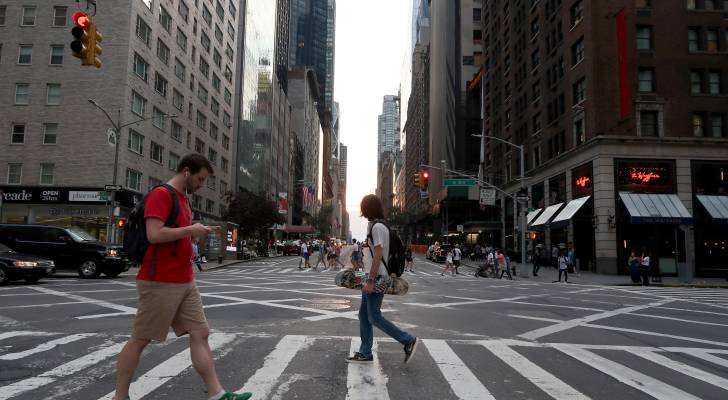
Richard Hirsch lives in Carnegie House, a 1960s brick co-op building nestled within New York City’s glitzy Midtown Manhattan. He used to joke that he lived on “Thousandaires’ Row” — a play on the “Billionaires’ Row” nickname given to the neighborhood, now crowded with supertall skyscrapers and condos trading for tens of millions of dollars.
But Hirsch and his wife Jill Strauss aren’t laughing anymore. After the couple paid around $400,000 for their two-bedroom co-op in the 1990s, The Wall Street Journal reports they now face a crushing rent hike that could push their monthly costs from about $5,000 to $13,000.
The shock stems from a little-known feature of their ownership structure: a long-term ground lease. And it’s a time bomb that could explode under thousands of other New Yorkers.
Trending Now
- Thanks to Jeff Bezos, you can now become a landlord for as little as $100 — and no, you don’t have to deal with tenants or fix freezers. Here’s how
- I’m 49 years old and have nothing saved for retirement — what should I do? Don’t panic. Here are 6 of the easiest ways you can catch up (and fast)
- Dave Ramsey warns nearly 50% of Americans are making 1 big Social Security mistake — here’s what it is and 3 simple steps to fix it ASAP
A 450% increase — and a fight for survival
In most real estate deals, you own your home and the land beneath it. But some co-op buildings sit on land leased from another party, and tenants can build on and improve the property.
This was originally a way to make housing affordable in pricey areas. Buyers paid less upfront but covered the cost of the land over time through rent. Many of these leases last for decades, and terms are renegotiated at regular intervals. If a lease expires, a landlord may be able to take ownership of any structures.
Several Carnegie House residents told The Journal they were aware of the ground lease when purchasing their apartments, but were advised by attorneys that costs were unlikely to jump significantly. However, values in the surrounding area have since spiked, and in 2014 the land was sold for $261 million to an entity tied to real estate tycoons Rubin Schron and David Werner.
Residents hoped for a manageable rent increase when the lease reset in 2025. But after negotiations broke down, an independent arbitration panel announced a ruling on July 18 that would raise the co-op’s annual ground rent from $4.36 million to around $24 million — a 450% increase.
Hirsch, who serves as co-op board president, called the ruling “basically death,” per The Journal. He and the board are exploring their legal options.
If the lease tenants — which include the owners of the building’s retail and garage spaces — can’t pay the new rent, the building could go into default and residents would lose all equity in their homes, the co-op board told The Journal. If the ground lease is terminated, those with mortgages may also be stuck owing the bank, despite no longer owning their units.
The human cost
Lou and Barb Grumet, both in their 80s and living on fixed pensions, bought their Carnegie House apartment in 2011 for around $780,000. They chose the building for its accessibility and proximity to hospitals. Now, their monthly costs are expected to leap from $3,700 to $9,000.
“We were going to live here till we die,” Lou told The Journal. “No one dreamed of the craziness that’s happened here.”
Some residents believe the landowners want exactly that: to push them out and make way for a new supertall skyscraper. A spokesperson for the landowners told The Journal there were no redevelopment plans, saying residents knew the risks and got a discount when they bought in.
Read more: Here are 5 ‘must have’ items that Americans (almost) always overpay for — and very quickly regret. How many are hurting you?
Still, warning signs have been flashing for years. After the 2014 sale, major banks stopped issuing mortgages in the building. Prices have tanked. One unit that sold for $535,000 in 2015 was listed for $189,000, reports The Journal.
Carnegie House isn’t alone. According to the Ground Lease Coop Coalition, more than 25,000 New Yorkers live in co-ops with similar land arrangements. Many of those leases are nearing expiration or scheduled resets, meaning other buildings could soon face similar rent spikes and financial chaos.
“These co-ops are time bombs,” attorney Geoffrey Mazel, who’s worked on ground lease negotiations across the city, told The Journal.
Can lawmakers help?
State lawmakers introduced a bill in 2024 to cap rent increases after ground leases expire, among other protections, but the bill didn’t advance. A narrower version passed some committees in 2025 but stalled.
The Real Estate Board of New York (REBNY) opposed the legislation, arguing that “meddling in longstanding contracts for the benefit of a small handful of largely wealthy homeowners and real-estate speculators in Manhattan is bad public policy,” according to a statement obtained by The Journal.
Supporters say laws should adapt to the needs of the public.
“It hasn’t been a problem until now,” State Sen. Liz Krueger told The Journal. “So now we have to intervene.”
What buyers should know
If you’re shopping for a co-op in NYC, ask whether the building sits on a ground lease and how much time is left on it. If the lease expires within 20 years or includes major rent reset clauses, that may be cause for concern — for both you and mortgage lenders. Have a real estate attorney review the lease terms before you sign anything.
If you already own a home in a ground-lease building, stay informed. Talk to your co-op board, follow any arbitration updates and stay up to date with advocacy groups fighting for legal protections. And if you’re facing a huge hike in costs like Carnegie House residents, consult a financial planner to weigh your options, including whether to stay or sell.
But selling may not offer much relief. When values plummet and buyers can’t get loans, you might be stuck.
What to read next
- Robert Kiyosaki warns of a ‘Greater Depression’ coming to the US — with millions of Americans going poor. But he says these 2 ‘easy-money’ assets will bring in ‘great wealth’. How to get in now
- The ultrarich monopoly on prime US real estate is over — use these 5 golden keys to unlock passive rental income now (with as little as $10)
- This tiny hot Costco item has skyrocketed 74% in price in under 2 years — but now the retail giant is restricting purchase. Here’s how to buy the coveted asset in bulk
- Want an extra $1,300,000 when you retire? Dave Ramsey says this 7-step plan ‘works every single time’ to kill debt, get rich in America — and that ‘anyone’ can do it
Stay in the know. Join 200,000+ readers and get the best of Moneywise sent straight to your inbox every week for free. Subscribe now.
This article provides information only and should not be construed as advice. It is provided without warranty of any kind.