
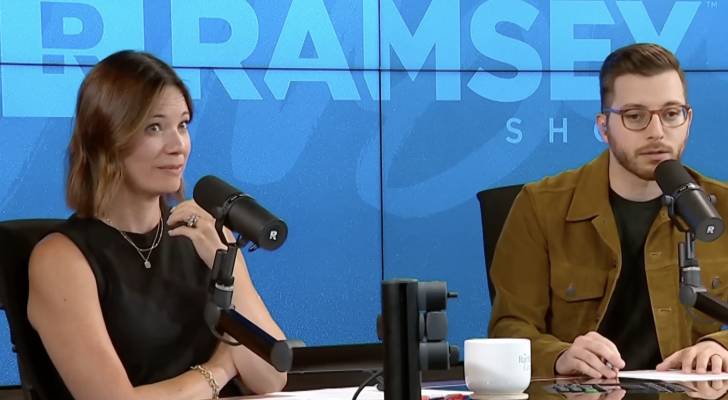
About a year ago, Frank from South Carolina cosigned a car loan for his brother-in-law — against his wife’s wishes and his own better judgment. Now his brother-in-law is “going away for a very long time on a vacation” — a.k.a. in jail.
Frank told The Ramsey Show that his brother-in-law had $20,000 to put down on a new Chrysler 300 and asked if Frank could co-sign the car loan. His brother-in-law is “a big, dumb animal” that he loves dearly, so he obliged.
Must Read
- Thanks to Jeff Bezos, you can now become a landlord for as little as $100 — and no, you don’t have to deal with tenants or fix freezers. Here’s how
- I’m 49 years old and have nothing saved for retirement — what should I do? Don’t panic. Here are 6 of the easiest ways you can catch up (and fast)
- Dave Ramsey warns nearly 50% of Americans are making 1 big Social Security mistake — here’s what it is and 3 simple steps to fix it ASAP
But now his brother-in-law is in prison and Frank is on the hook for the loan. He doesn’t want or need the car. The buyout is $62,000, but if he goes through a private seller, he might get around $50,000. That would leave him about $12,000 underwater.
Now Frank is wondering if he should let the car go into voluntary repossession. But The Ramsey Show hosts say there’s only one way out of this mess — and it’s going to hurt.
A spiraling problem
Frank is stuck with a $1,100 monthly car payment — but to make matters worse, he’s behind on his payments by $5,200 and the car (which is in Arizona) has gone up for repossession.
“You’re gonna have Dog the Bounty Hunter at your door, man,” said co-host George Kamel. “This is not the way you want to go, Frank.”
Read more: This is how much US drivers saved on car insurance when they switched providers, according to a new Consumer Reports survey of 140,000 policyholders
If he lets the car go into voluntary repossession, it will go to auction and he’ll get much less than he would through a private sale.
“You’ll be lucky if they sell for 30 [grand],” said Kamel. “They’re going to sell it for bottom dollar at auction because they don’t give a rip and they’re going to put you on the hook for the difference plus fees.”
This is known as negative equity (subtracting the amount you could get through a private sale from the amount you still owe on the car).
Frank has about $10,000 to $12,000 in savings, so he doesn’t have enough money to cover his negative equity, though he could at least catch up on the monthly car payments.
But his wife isn’t onside with that.
“She’s mad at you,” said co-host Rachel Cruze. After all, his wife told him not to co-sign the loan, but he did it anyway.
While it may not go over well with his wife — he might just end up sleeping in that car — Kamel said it’s going to cost his family “a whole lot more than five grand if you do it the wrong way.”
Biting the bullet
His only real option is to bite the bullet and accept that he’s going to lose money.
Kamel said Frank “might as well control the variables here.” That means getting caught up with his monthly car payments and then selling the car in a private sale for as much as he can.
For anyone in a similar situation, you can find out how much your car would be worth in a private sale by doing a search on Kelley Blue Book.
Aside from $5,200 in back payments, Frank will still need to cover whatever remains of the loan after he sells the car. If he’s lucky enough to make $30,000 on the sale, he’d still owe $12,000, which Kamel said he could consider a “stupid tax.”
“That’s the only way out of this that is going to leave you with the least amount of harm,” said Kamel.
It’s also going to be less painful than going through voluntary repossession, in which case he’d owe even more money.
The key is, he needs to do it as soon as possible. The longer it goes on, the more those payments will add up. Plus, the car is already up for repossession.
“So go ahead, rip the Band-Aid off,” said Cruze.
Since he doesn’t have enough money to cover the loan, Kamel recommends going to his local credit union and taking out a personal loan for the difference and then “clean that up fast.”
Ramsey Solutions doesn’t normally recommend going into debt with a personal loan, but in the case of negative equity on a car — one with depreciating value — it may help you from going even deeper underwater with debt.
You may be able to get a lower interest rate with a personal loan.
While Frank says he’s learned his lesson, Kamel hopes everyone in America learned this lesson too: “Never cosign for anything.”
What to read next
- How much cash do you plan to keep on hand after you retire? Here are 3 of the biggest reasons you’ll need a substantial stash of savings in retirement
- There’s still a 35% chance of a recession hitting the American economy this year — protect your retirement savings with these 5 essential money moves ASAP
- This tiny hot Costco item has skyrocketed 74% in price in under 2 years — but now the retail giant is restricting purchase. Here’s how to buy the coveted asset in bulk
- Want an extra $1,300,000 when you retire? Dave Ramsey says this 7-step plan ‘works every single time’ to kill debt, get rich in America — and that ‘anyone’ can do it
Join 200,000+ readers and get Moneywise’s best stories and exclusive interviews first — clear insights curated and delivered weekly. Subscribe now.
This article provides information only and should not be construed as advice. It is provided without warranty of any kind.