
Thinking about getting solar panels? Make sure you fully understand whether you’re renting or leasing — before you sign on the dotted line.
As of December 2023, 4.7 million solar systems are operating in the U.S. according to the Solar Energy Industries Association (1).
Must Read
- Real Estate: Thanks to Jeff Bezos, you can now become a landlord for as little as $100 — and no, you don’t have to deal with tenants or fix freezers. Here’s how
- Retirement: Dave Ramsey warns nearly 50% of Americans are making 1 big Social Security mistake — here’s what it is and 3 simple steps to fix it ASAP
- Investing: Warren Buffett used 8 solid, repeatable money rules to turn $9,800 into a $150B fortune. Start using them today to get rich (and stay rich)
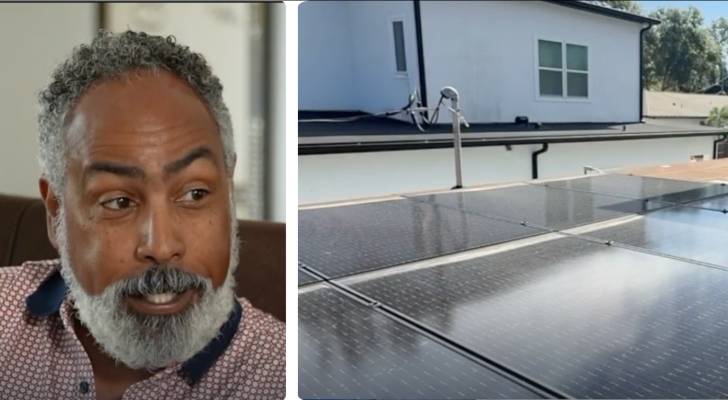
Chappy Floyd, of North Tampa, was one of them. After Hurricane Milton hit the region in 2024, he decided to install solar panels, he told Tampa Bay 28.
“The interest rates were very high, so I was trying to decide whether I wanted to finance or lease,” he said, adding that a five-year lease with a buyout option seemed to make the most sense financially.
Floyd financed his system through solar financing firm EnFin, which paid the installer directly, and entered into what both the financier and installer assured him was a lease agreement. However, a year later, when he was looking into buyout options, Floyd discovered that what he believed to be a lease was actually a rental agreement.
That came as a surprise, since the word ‘lease’ appeared 177 times in his 56-page agreement while the word ‘rent’ was never used, according to the news report. The agreement does, however, state, “This lease is not a contract to sell the System to you or a contract to sell you the energy the System generates. EnFin owns the System.”
A costly misunderstanding
Once the full lease amount of $104,965.20 was paid off, Floyd had two options for buying the system: either “the full lease terms again but with a 5% discount, or fair market value to be determined by a third-party appraiser hired by EnFin,” according to the news report.
The system, which includes a power wall, three backup batteries and a gateway system that collects data, is worth just $55,000. However, if Floyd were to purchase it at the end of his term, he will pay almost four times that amount — and it’s unlikely his energy savings will make up the difference (2).
While it varies by state, the specifics of the installation and which extras you choose to purchase (such as backup batteries), the average price for a professionally installed solar panel is $1,200, which means most full systems cost between $24,000 and $36,000, according to a 2025 survey of 1,000 solar customers by This Old House (3).
Paying cash up front is typically the least expensive financing choice, followed by a solar-specific loan on which you’d pay interest and, potentially, substantial fees. With both options you’d typically qualify for government solar incentives, but you’ll be responsible for maintenance.
Power purchase agreements (PPAs) and lease agreements are more costly but don’t require a large upfront payment and, while you won’t qualify for incentives, you won’t be responsible for maintenance. Both of these options are long-term agreements between you and a solar service provider who will install and maintain the system.
In the case of a PPA, you’ll pay for electricity from the system at a cost per kilowatt-hour. With a lease, you pay a flat monthly rate for the system and gain the right to use the electricity it produces (4).
Read more: Robert Kiyosaki says this 1 asset will surge 400% in a year — and he begs investors not to miss its ‘explosion’
Do your due diligence
It’s important to weigh your options — and do the math — before making a decision.
For example, the average U.S. home needs a 6 kW solar panel system, according to Solar Vipani, an online solar marketplace. According to that source, if you pay cash up front for this system, you’ll receive tax incentives, so your cost will be about $12,600 and your net savings versus the grid will be $52,400 over 25 years (5). But be aware that these are expiring at the end of this year (6).
If you take out a solar loan at 6% over 15 years, you pay nothing up front but you’ll pay $18,500 in total over 25 years and save $46,500 versus the grid, again according to Solar Vipani. A PPA will cost nothing up front but you’ll spend $33,000 over 25 years and save $32,000 versus the grid. If you lease, you’ll pay nothing up front, but it will cost $36,000 over 25 years and you’ll save $29,000 versus the grid (5).
Once you decide on a payment method, it’s important to fully understand the agreement you’re signing. Floyd ended up hiring a lawyer and reached a confidential settlement (2), but if he’d had a lawyer review the contract before he signed it, he may have discovered that the contract was not what it appeared to be.
If you’re considering a lease agreement, it’s worth reviewing the U.S. Department of the Treasury document, Before you Sign a Lease Agreement, which explains lease agreements, provides questions to ask lease providers and points out red flags to watch out for (7).
Lease agreements are complex and should be reviewed carefully — ideally with a lawyer — especially when large sums of money are involved.
“I don’t think it’s possible for an average consumer to be able to comprehend the transaction at its full,” Joshua Horton, a lawyer specializing in solar cases who worked with Floyd, told Tampa Bay 28.
“I would take any contract to an attorney before I sign anything with a solar contractor” (1).
What to read next
- ‘Hold onto your money’: Jeff Bezos issued a warning to rethink buying a ‘new automobile, refrigerator, or whatever’ — does it hold true today?
- Dave Ramsey says this 7-step plan ‘works every single time’ to kill debt, get rich — and ‘anyone’ can do it
- I’m almost 50 years old and have nothing saved for retirement. What do I do? Don’t panic. Here are 6 easy ways to catch up (and fast)
- 22 US states are already in a recession — protect your savings with these 10 essential money moves ASAP
Join 200,000+ readers and get Moneywise’s best stories and exclusive interviews first — clear insights curated and delivered weekly. Subscribe now.
Article Sources
We rely only on vetted sources and credible third-party reporting. For details, see our editorial ethics and guidelines.
Solar Energy Industries Association (1); Tampa Bay 28 (2); This Old House (3); Solar Reviews (4); Solar Vipani (5); Solar.com (6); U.S. Treasury (7)
This article provides information only and should not be construed as advice. It is provided without warranty of any kind.