
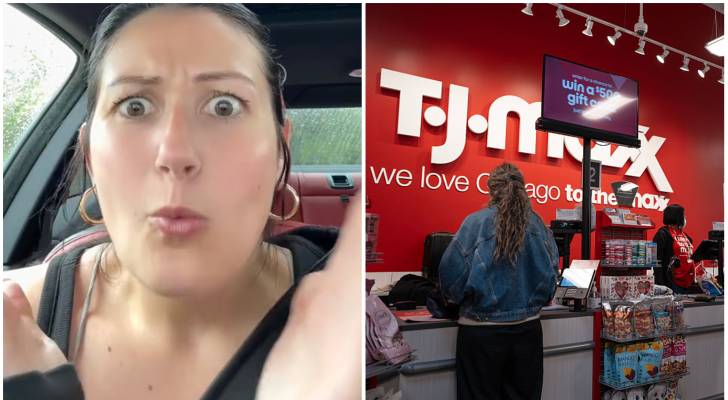
A T.J. Maxx shopper recently went viral on TikTok after she posted a video about her frustrating experience being repeatedly pressured by employees into signing up for a store credit card; even after she said no.
Ashley (@ashleydarkmoon) raged about a store supervisor pushing her to accept the card after she had already rejected the offer from a cashier. (1) The supervisor suggested she could save $18 on her purchase if she got the card.
Must Read
- Thanks to Jeff Bezos, you can now become a landlord for as little as $100 — and no, you don’t have to deal with tenants or fix freezers. Here’s how
- Dave Ramsey warns nearly 50% of Americans are making 1 big Social Security mistake — here’s what it is and 3 simple steps to fix it ASAP
- ‘Rich Dad, Poor Dad’ author Robert Kiyosaki says this 1 asset will surge 400% in a year — and he begs investors not to miss its ‘explosion’
“I don’t give a (expletive) about $18,” Ashley says on TikTok. “I don’t want another credit card.”
She wraps up her post saying she’s ready to stop shopping at the retail chain. The post struck a nerve, racking up thousands of comments from viewers who said they’ve had similar experiences at other stores.
Store-branded credit cards can feel like an easy “yes” when you’re offered an instant discount, like the $18 dangled in front of Ashley.
But whether it’s 10% or even 20% off your purchase for signing up, that quick win can cost you later.
Why stores push credit cards so hard
The TikToker isn’t alone in her experience of being pressured. According to the Consumer Financial Protection Bureau (CFPB), retail workers are often incentivized to push store cards on consumers, and there are multiple reports of consumers experiencing aggressive sales tactics.
That’s because credit cards are big business, and retailers want their piece of the pie. Between 2018 and 2023, store credit cards brought in roughly 8% of total gross profits for major retailers, according to the Consumer Financial Protection Bureau.
Read more: How much cash do you plan to keep on hand after you retire? Here are 3 of the biggest reasons you’ll need a substantial stash of savings in retirement
The cards are also a way to keep shoppers loyal. When you swipe a store card, you’re more likely to return, spend more, and pay interest if you carry a balance. That may go some way to explaining the level of consumer debt in America.
By August 2025, U.S. credit debt had reached $1.2 trillion, as the Federal Reserve notes.
What consumers need to watch out for
So what can you do when you’re standing at the cash register and the offer is in front of you?
It can be tempting to sign up if you see some immediate savings, but you might want to hit pause before going any further.
According to the CFPB, if you open too many new accounts in a short time, you can hurt your credit score. So all those “deals” you’re scoring when you go shopping and open all the store accounts? They can come back to bite you.
Store cards have some of the highest interest rates in the market. The average retail card annual percentage rate (APR) is about 30%, compared to 24% interest on general-purpose cards. That difference adds up quickly if you hold a balance on the card.
The reality is that many retailers are promoting credit cards, so it’s best practice to make sure you know what you sign up for: (2)
- “Pre-approved” doesn’t mean guaranteed. Keep in mind that getting a hard inquiry will affect your credit score.
- Limited-time offers can be tempting and can make you feel pressured to sign up on the spot, but remember that long-term costs often outweigh that initial discount.
- Be aware of the terms and conditions associated with the rewards.
- Think about whether you would want this card without the upfront discount or bonus.
There are some situations in which a store credit card could make sense.
The No. 1 rule is to pay off the full balance every month, according to Experian. (3) If you can, then there are added benefits like store rewards, which can provide perks or discounts. Store cards can also be a way to build up credit if you manage your payments responsibly.
That said, a quick “yes” at the checkout counter could cost you if you spend more than you typically would just for the store rewards. If you don’t pay annual or late fees, it could negatively impact your credit score.
So next time you’re at the cash register and the offer comes up, remember that if you can’t pay it off in full every month or it doesn’t genuinely fit your financial habits, do what Ashley did and just say no.
Article sources
We rely only on vetted sources and credible third-party reporting. For details, see our editorial ethics and guidelines.
TikTok (1); Consumer Financial Protection Bureau (2); Experian(3)
What to read next
- Want an extra $1,300,000 when you retire? Dave Ramsey says this 7-step plan ‘works every single time’ to kill debt, get rich in America — and that ‘anyone’ can do it
- I’m 49 years old and have nothing saved for retirement — what should I do? Don’t panic. Here are 6 of the easiest ways you can catch up (and fast)
- There’s still a 35% chance of a recession hitting the American economy this year — protect your retirement savings with these 5 essential money moves ASAP
- This tiny hot Costco item has skyrocketed 74% in price in under 2 years — but now the retail giant is restricting purchase. Here’s how to buy the coveted asset in bulk
Join 200,000+ readers and get Moneywise’s best stories and exclusive interviews first — clear insights curated and delivered weekly. Subscribe now.
This article provides information only and should not be construed as advice. It is provided without warranty of any kind.