
This article adheres to strict editorial standards. Some or all links may be monetized.
The median sales price for an American home hit $410,800 as of July 2025. Meanwhile, the U.S. Census Bureau reported that as of 2024, median household income had only just recovered to 2019 levels. So, as the cost to buy a home soars, the average family’s income remains stagnant or even declines.
Must Read
- Real Estate: Thanks to Jeff Bezos, you can now become a landlord for as little as $100 — and no, you don’t have to deal with tenants or fix freezers. Here’s how
- Retirement: Dave Ramsey warns nearly 50% of Americans are making 1 big Social Security mistake — here’s what it is and 3 simple steps to fix it ASAP
- Investing: Warren Buffett used 8 solid, repeatable money rules to turn $9,800 into a $150B fortune. Start using them today to get rich (and stay rich)
Chief Investment Officer Matt Birenbaum of AvalonBay Communities (AVB), a real-estate investment trust, explained in 2024, “We think we’re really in the early stages of what could be a pretty significant, almost new, investment class.”
But the opportunity to partake isn’t limited to institutional investors — here are a few ways everyday investors can capitalize on this growing trend.
How you can invest in the growing rental market
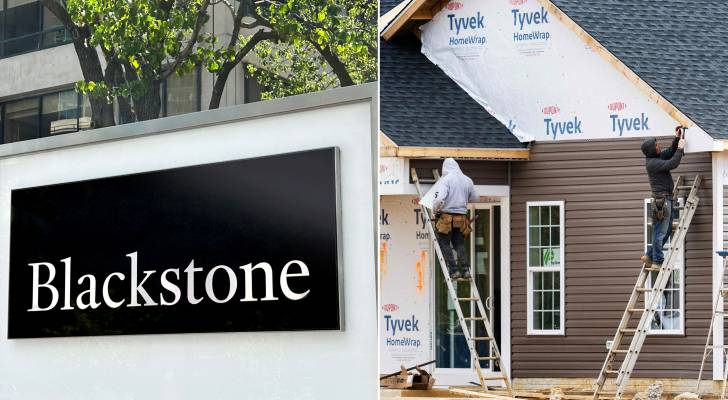
The build-to-rent model is redefining housing development as we know it across America. Developers are increasingly constructing neighbourhoods of single-family homes with the sole intent to lease them, rather than sell them.
In late 2023, the U.S. Census Bureau reported the share of build-to-rent homes had doubled since 2021, reflecting 10% of all new homes. While that may still seem like a relatively small slice of the full pie, the Wall Street Journal found that major investors are tapping in with hopes the figure will grow. Their research spotlighted several major players including Blackstone (BX), Invitation Homes (INVH) and Pretium Partners (PVG) who are actively investing in this market.
If you want to jump into the real estate investment game, there are a number of platforms available to help.
Home equity has long been one of America’s most reliable wealth builders — but until recently, it’s been hard to invest in without buying property outright or competing with institutional players.
Now, with home values surging and homeowners shying away from new debt, investors have a new way in.
Homeshares gives accredited investors access to this overlooked segment: the billions in locked-in equity sitting in owner-occupied homes.
Instead of purchasing properties, investors participate through a portfolio of Home Equity Agreements (HEAs) — allowing homeowners to unlock cash with no monthly payments, while investors share in future appreciation.
The result is exposure to a large, under-tapped market across top U.S. cities, without the headaches of being a landlord or the risk of being overleveraged.
HEAs come with built-in protection: they usually cover 25 to 35% of a home’s value in a lien secured position, which helps shield your investment if the market dips. And unlike traditional real estate, HEAs are also typically resilient to interest rate shifts, offering attractive, risk-adjusted returns even during economic uncertainty.
With diversified portfolios of high-quality homes and target returns of 14% to 17%, Homeshares offers a practical way to gain exposure to a growing corner of the real estate market.
For those who prefer accessible fractional investing, Arrived — an online platform backed by prominent investors like Jeff Bezos — offers retail investors the opportunity to buy shares in existing rental and vacation homes.
You can get your foot into the real estate market without buying property outright, while taking advantage of the growing demand for rental investment opportunities.
Arrived allows you to browse through their curated selection of homes, each vetted for their appreciation and income potential. Once you find a property you like, you can choose the number of shares you want to buy and start investing with as little as $100.
Read More: No time to lower your crippling car insurance rate? Here’s how to do it within minutes — you could end up paying $29/month without a single phone call
Retail giants rent property, too
This trend isn’t only confined to residential properties. The rising popularity of rental investments extends into the commercial property market as well. It’s also happening all over North America.
This summer, Western Residential analyzed Canada’s largest commercial real estate markets and found developers had shifted focus toward purpose-built rental construction, sometimes at the expense of new residential condominiums and commercial buildings.
A recent report from Cushman & Wakefield also commented, “for the first time in years, the retail market is at a point of being supply-constrained — at least for space in quality shopping centers."
With both commercial and residential supply constrained, rental prices could be pushed higher, creating attractive returns for investors.
First National Realty Partners (FNRP) offers accredited investors access to these types of promising retail-anchored real estate investments, without the legwork of finding deals yourself.
The FNRP team has developed relationships with shopping centers and health-care facilities across the U.S., as well as the nation’s largest essential-needs brands, including Kroger, Walmart and Whole Foods.
They also offer white-glove service for investors, providing key market insights and finding the best properties both on and off-market, while investors can passively collect distribution income.
You can engage with experts, explore available deals and easily make an allocation, all in one personalized secure portal.
Why homeownership remains out of reach for many
The affordability crisis in housing isn’t only exacerbated by rising prices and a supply shortage. Elevated mortgage rates also make homeownership a challenge. As of November 6, 2025, the average 30-year mortgage rate is hovering at 6.22% — not far from its five-year high of 7.9% in October 2023.
Adding fuel to fire are claims, such as those made by WSJ, the Federal Reserve is likely cut rates only twice next year, according to a report from The Associated Press.
Nonetheless, some Americans will simply prefer or need to buy a home. Many will also still be paying off their mortgage, and perhaps unable to consider other investment opportunities at this time.
Both can benefit from shopping around for a more competitive rate. 2023 research from LendingTree found that doing so can save borrowers over $76,000 throughout the loan’s lifetime.
However, negotiating a new mortgage rate can be a cumbersome process if you don’t know where to start. Mortgage Research Center (MRC) offers a quick and efficient way to compare mortgage rates and estimated monthly payments from multiple vetted lenders at once. All you have to do is enter some basic information, such as your zip code, property type, price range, and annual income.
Based on the information you provide, MRC displays personalized mortgage offers near you.
After you match with a desired lender, you can set up a free, no-obligation consultation to make sure you’ve found the right fit.
What to read next
- Dave Ramsey says this 7-step plan ‘works every single time’ to kill debt, get rich — and ‘anyone’ can do it
- Robert Kiyosaki says this 1 asset will surge 400% in a year — and he begs investors not to miss its ‘explosion’
- Even in a choppy market, young millionaires are betting big on these asset classes — and older Americans should take note
- I’m almost 50 years old and have nothing saved for retirement. What do I do? Don’t panic. Here are 6 easy ways to catch up (and fast)
Join 200,000+ readers and get Moneywise’s best stories and exclusive interviews first — clear insights curated and delivered weekly. Subscribe now.
This article provides information only and should not be construed as advice. It is provided without warranty of any kind.