
Charles Dickens famously wrote a story that gets told around this time of year, about a rich old man who discovers that the best thing he can do with his wealth is to help those less fortunate.
Must Read
- Thanks to Jeff Bezos, you can now become a landlord for as little as $100 — and no, you don’t have to deal with tenants or fix freezers. Here’s how
- Robert Kiyosaki says this 1 asset will surge 400% in a year — and he begs investors not to miss its ‘explosion’
- Dave Ramsey warns nearly 50% of Americans are making 1 big Social Security mistake — here’s what it is and 3 simple steps to fix it ASAP
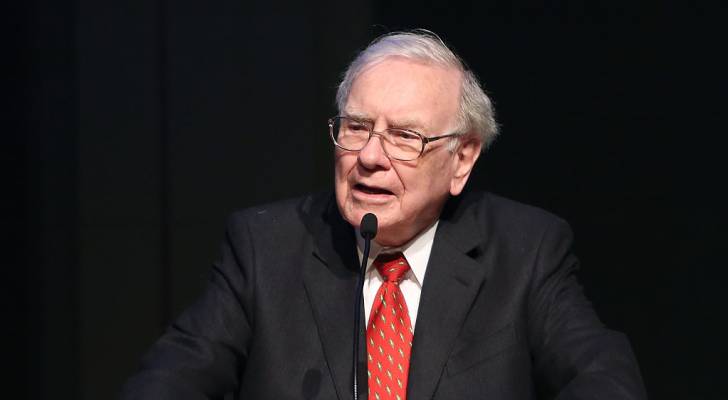
It’s a story that comes to mind as one reads the 2025 Thanksgiving missive penned by billionaire Warren Buffett. We can safely presume that Buffett, who is known almost as much for his philanthropy as he is for his investment acumen, didn’t require a late-night visit from three spirits to prompt him to convert 1,800 A shares of Berkshire Hathaway into 2,700,000 B shares to donate to four of his family’s charitable foundations.
The shares amount to upwards of $1.3 billion for The Susan Thompson Buffett Foundation, named in honour of the 95-year-old’s late wife, as well as three others run by his children: The Sherwood Foundation, The Howard G. Buffett Foundation and the NoVo Foundation.
In his letter, the “Oracle of Omaha” also discussed the future of Berkshire Hathaway and his faith in the next CEO, Greg Abel, memories of his own life and his reasons for “going quiet” [1].
“Lady Luck continued to drop by during much of my life, but she has better things to do than work with those in their 90s,” Buffett writes. “When balance, sight, hearing and memory are all on a persistently downward slope, you know Father Time is in the neighborhood. I was late in becoming old — its onset materially varies — but once it appears, it is not to be denied.”
Nevertheless, like Dickens’ Christmas Carol, Buffett’s ”Thanksgiving Tale” — which he intends to continue writing each year — is a story of optimism, generosity and the belief that you’re never too old to change. To that end, Buffett leaves three important nuggets of wisdom for every older American to consider.
1. It’s never too late to be a better version of yourself
In his letter, Buffett writes that, “I’m happy to say I feel better about the second half of my life than the first.” And, true, many might counter that with, “Well of course, you do. You became a billionaire in your mid-50s.”
But for Buffett, it’s less about net worth than it is about self-worth.
“Greatness does not come about through accumulating great amounts of money, great amounts of publicity or great power in government,” he writes. “When you help someone in any of thousands of ways, you help the world. Kindness is costless but also priceless.”
Buffett adds an anecdote about Swedish inventor Alfred Nobel, who experienced a Scrooge-like rude awakening when a newspaper prematurely printed his obituary. “He was horrified at what he read and realized he should change his behavior,” Buffett explains, before advising that readers “decide what you would like your obituary to say and live the life to deserve it.”
Part of that, he says, is forgiving your past mistakes — “learn at least a little from them and move on. It is never too late to improve” — and remaining humble.
In terms of the latter, Buffett acknowledges the privilege (“I was born in 1930 healthy, reasonably intelligent, white, male and in America”) that gave him a head start compared to many others — including his own sisters — and recounts how he’s grown over time, learning important lessons from friends about how to “behave better.”
Trending: I’m almost 50 and have nothing saved for retirement — what now? Don’t panic. These 6 easy steps can help you turn things around
In that vein, one more tidbit of advice from the Oracle: “Choose your heroes very carefully and then emulate them. You will never be perfect, but you can always be better.”
2. Pick grounded leaders and focus on long-term stability
Another theme of Buffett’s letter is his confidence in Berkshire’s leaders and prospects. He thinks the company has “less chance of a devastating disaster” and “a more shareholder-conscious management and board” than any business he knows.
“With a little luck, Berkshire should require only five or six CEOs over the next century,” he writes. “It should particularly avoid those whose goal is to retire at 65, to become look-at-me rich or to initiate a dynasty.”
This points to Buffett’s shrewdness in investing for the future — a prescient strategy given he’s 95 years old and counting. Buffett is in many ways an understated billionaire, one of the world’s richest men who eschews the spotlight, lives in the same Omaha house he bought in 1958 and still shows up “at the office five days a week where I work with wonderful people.”
As the economy fluctuates, he recognizes that the company’s stock will do so along with it. But, he points out, the stock has already fallen around 50% “three times in 60 years under present management.” Contrary to being cause for despair, however, it proves that sound and steady financial strategies win out in the end. “America will come back,” Buffett adds, “and so will Berkshire shares.”
For the record, Berkshire’s recently-announced Q3 earnings report showed a 17% year-over-year increase in profits (net income) to $30.8 billion.
3. Estate planning is essential (and make sure your heirs know your wishes!)
In announcing his intention to donate more than a billion dollars to his family’s charities, Buffett also outlined an essential lesson for all older Americans: proper estate planning is key.
For his part, Buffett trusts his children — aged 72, 70 and 67 respectively — to wisely disburse the large amounts of wealth he’s passing along to their individual foundations.
He’s also ensured that they have “three alternate trustees in case of any premature deaths or disabilities” with “no conflicting motives.”
Over the years he says he’s seen his share of “ill-conceived wealth transfers by political hacks, dynastic choices and, yes, inept or quirky philanthropists.”
“If my children simply do a decent job, they can be certain that their mother and I would be pleased,” he writes. “Their instincts are good and they each have had years of practice with very small sums initially that have been irregularly increased to more than $500 million annually.”
All of which highlights the importance of keeping your kids or other heirs in the loop when it comes to your final wishes — whether you have hundreds, thousands or billions to pass along.
After all, as Buffett himself points out, “Ruling from the grave does not have a great record” — a sentiment that even Ebenezer Scrooge could surely get behind.
What to read next
- Dave Ramsey says this 7-step plan ‘works every single time’ to kill debt, get rich — and ‘anyone’ can do it
- Are you richer than you think? 5 clear signs you’re punching way above the average American’s wealth
- Warren Buffett used 8 simple money rules to turn $9,800 into a stunning $150B — start using them today to get rich (and then stay rich)
- This tiny hot Costco item has skyrocketed 74% in price in under 2 years — but now the retail giant is restricting purchase. Here’s how to buy the coveted asset in bulk
Join 200,000+ readers and get Moneywise’s best stories and exclusive interviews first — clear insights curated and delivered weekly. Subscribe now.
Article sources
We rely only on vetted sources and credible third-party reporting. For details, see our editorial ethics and guidelines.
Berkshire Hathaway (1)
This article originally appeared on Moneywise.com under the title: Warren Buffett warns Father Time close with memory in decline. But leaves 3 golden nuggets for older Americans
This article provides information only and should not be construed as advice. It is provided without warranty of any kind.