
This article adheres to strict editorial standards. Some or all links may be monetized.
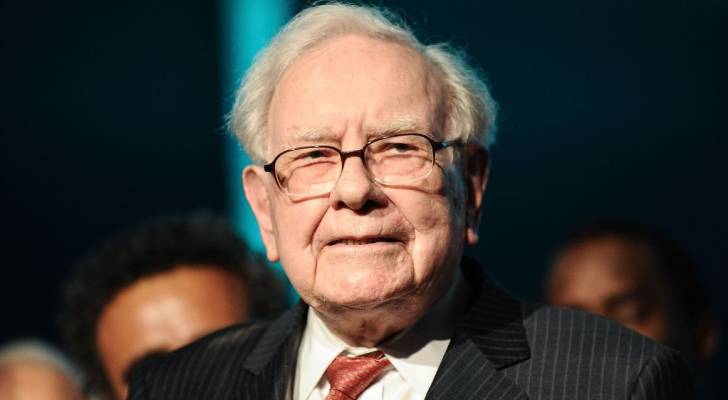
The Oracle of Omaha has been investing since childhood, and no matter what happens in the market or the world, he remains unflappable in his dedication to his strategy.
He showed his discipline back in 2004 at a Berkshire Hathaway meeting, when he answered an audience question about market uncertainty (1).
Must Read
- Real Estate: Thanks to Jeff Bezos, you can now become a landlord for as little as $100 — and no, you don’t have to deal with tenants or fix freezers. Here’s how
- Retirement: Dave Ramsey warns nearly 50% of Americans are making 1 big Social Security mistake — here’s what it is and 3 simple steps to fix it ASAP
- Investing: Warren Buffett used 8 solid, repeatable money rules to turn $9,800 into a $150B fortune. Start using them today to get rich (and stay rich)
During this period, the Iraq War was happening, consumer debt was increasing, wages and job growth were declining, and interest rates were rising. The audience member asked, “The next five to ten years are going to be very difficult. What would your view be about the investment future for the next five to ten years in view of all these negative factors going on?”
Buffett’s advice was simple: Don’t panic. Stay the course.
Markets crash and rise again
Buffett was quick to point out just how bad things had been in the past, yet he sat there as one of the wealthiest men in the world despite these events.
“I would say that at any given point in history, you could find an equally impressive number of negative factors,” he said.
Buffett noted that in 1974, stocks were “screaming bargains,” and there were many events that led people to think “the future is just going to be terrible,” but he never paid attention to these when it came to his investment choices.
“You might say that our underlying premise — and I think it’s a pretty sound underlying premise — is that this country will do very well, and in particular it will do well for business,” he continued.
Buffett pointed to the many world events that have happened over the 20th century that were catastrophic — two world wars, nuclear bombs, flu epidemics, the Cold War — yet despite all this, the Dow went from 66 to 10,000 in that time.
“In this country, the opportunities have won out over the problems over time, and I think they will continue to do so,” the billionaire said. “I can’t remember any discussions Charlie and I have had, ever, going back to 1959, where we would have come to the conclusion at the end of them that we would have passed on a great business opportunity, a business to buy, because of external conditions.”
He concluded by pointing out that it isn’t the American economy that does investors in — it’s the investors themselves.
Read more: Robert Kiyosaki says this 1 asset will surge 400% in a year — and he begs investors not to miss its ‘explosion’
How to find opportunities in tough times
When headlines are constantly going on about an AI bubble about to burst, it makes sense that retail investors might feel wary about keeping money invested in certain markets. Especially when you read that billionaire Peter Thiel just dumped all his Nvidia stock, and the majority of his Tesla holdings (2). But Buffett would tell you that this won’t be the first time or last time a bubble will burst, and the best thing you can do when these things happen is remind yourself that investing is a long game.
After all, Berkshire Hathaway dropped 50% in value during the 2008 crash, but just as Buffett knew it would, eventually the market recovered and its value reached new heights (3).
Beyond that, the second-best thing to do at this time is to ensure your portfolio is sufficiently diversified. Berkshire Hathaway’s publicly traded portfolio includes 41 holdings, with no single stock representing more than 23% of the company’s value, according to its latest 13-F filing (4).
Here are some options to help ensure your portfolio is as diversified as it can be, should the AI bubble actually burst.
Keep your investing IQ high
If you want to remain as diversified as Berkshire Hathaway, you’ll need to stay well-informed.
The average retail investor is likely best served by simply buying and holding a total market ETF, as Buffett often suggests — but if your investment ambitions go deeper, you’ll need a tool that helps you understand market trends and the stocks that are worth buying now.
A platform like Moby can help. Their team of experts carefully selects between one and three stocks for your consideration each week. And their recommendations are delivered to you in simple, easy-to-understand language — meaning no overbearing financial jargon here.
Even better, in four years, across almost 400 stock picks, Moby’s recommendations have actually beaten the S&P 500 by nearly 12%, on average. With their easy-to-understand format, you can become a smarter investor in just five minutes.
You can try out Moby today with their free with a 7-day trial.
Make your investments commission-free
Buffett is a big advocate for low-cost investing — and commission-free platforms can help ensure your costs stay as low as possible over time.
When commission-free platforms first arrived, some worried this would make retail investors more likely to trade often and gamble within their investment accounts, but research from UC Berkeley found those fears never came true (5).
The 2023 report found that “net performance improves by about 11% annually, and this improvement is driven by savings from the removal of fees rather than changes in the returns of trades.”
Robinhood was the first platform to provide commission-free investing — and they still lead the way on low-cost investing. They offer an easy and cost-effective way to follow Buffett’s long-term investing advice.
You can even get a free stock when you sign up and link your bank account to the app.
Rewards can range from $5 to $200, and you can choose the particular stock you receive from some of the top American companies.
Have a strong team in place
If you’re managing a significant portfolio, it’s essential to ensure you have a wealth management team you trust working with you. As Buffett says, “It’s very important to surround yourself with people who are better than you are” (5).
In this context, Buffett means gathering knowledgeable advisors to support your investment decisions. Wealth managers, for example, can ensure your money is invested well and properly diversified. In fact, in 2019, Vanguard found that a $500,000 investment would see an average growth of $3.4 million when managed by an advisor over 25 years, while the same amount self-managed over 25 years was projected to be less than half, at $1.69 million (6).
The same report also found that an advisor’s advice can add 3% additional growth per year by providing financial planning, discipline and guidance, rather than by trying to time the market.
A wealth management team like Range can help ensure your portfolio is balanced with their all-in-one wealth management platform, offering modern investing advice with no hidden fees.
Since traditional advisors typically charge 0.5-2% AUM fees, Range’s flat-fee pricing with 0% AUM fees offers comprehensive plans at a fraction of the cost, potentially saving you thousands of dollars each year.
Range’s clients also receive 24/7 expert advice and personalized strategies, allowing for complete portfolio customization alongside full wealth management — including complex tax management, equity compensation and estate planning.
Book a free demo with the Range team today to find out how they can help.
Don’t forget about your emergency fund
When the outlook is bleak, it may be wise to keep calm and carry on investing as Buffett suggests — but it’s also a good time to make sure your emergency fund is strong.
Over the past year, Berkshire Hathaway has doubled its cash holdings to $344 billion, and while you shouldn’t run your personal portfolio like a business would, there is a lesson here around holding more cash during times of uncertainty.
If all your money is tied up in investments, now might be a good time to ensure you have at least 6 months’ worth of living expenses in cash, so you know you’re covered before a crash happens. The worst time to take money out of investments is once the market has already crashed.
Of course, having that much money sitting in a no-interest account means it will lose value thanks to inflation, so it’s best to stash your cash in a high-yield savings account to allow it to grow.
A high-yield account, such as a Wealthfront Cash Account, offers competitive interest rates while leaving your cash easy to access should the market suddenly dive.
A Wealthfront Cash Account provides a base variable APY of 3.50%, and new clients can also get a 0.65% boost over their first three months for a total APY of 4.15%. That’s over nine times the national deposit savings rate, according to the FDIC’s October report.
With no minimum balances or account fees, 24/7 withdrawals and free domestic wire transfers, your funds remain accessible at all times. Plus, Wealthfront Cash Account balances of up to $8 million are insured by the FDIC through program banks, so you know your money is safe.
What to read next
- ‘Hold on to your money’: Jeff Bezos issued a warning to rethink buying a ‘new automobile, refrigerator, or whatever’ — does it hold true today?
- Dave Ramsey says this 7-step plan ‘works every single time’ to kill debt, get rich — and ‘anyone’ can do it
- Keeping too much cash in your bank account could be a costly mistake — here’s how to know if you’ve got too much
- I’m almost 50 years old and have nothing saved for retirement. What do I do? Don’t panic. Here are 6 easy ways to catch up (and fast)
Join 200,000+ readers and get Moneywise’s best stories and exclusive interviews first — clear insights curated and delivered weekly. Subscribe now.
Article sources
We rely only on vetted sources and credible third-party reporting. For details, see our editorial ethics and guidelines*
YouTube (1), (5); Reuters (2); CNBC (3); Fintel.io (4; Wealth Enhancement (6)
This article provides information only and should not be construed as advice. It is provided without warranty of any kind.