
WSW, NY, September 23rd, 2026, NewsDirect
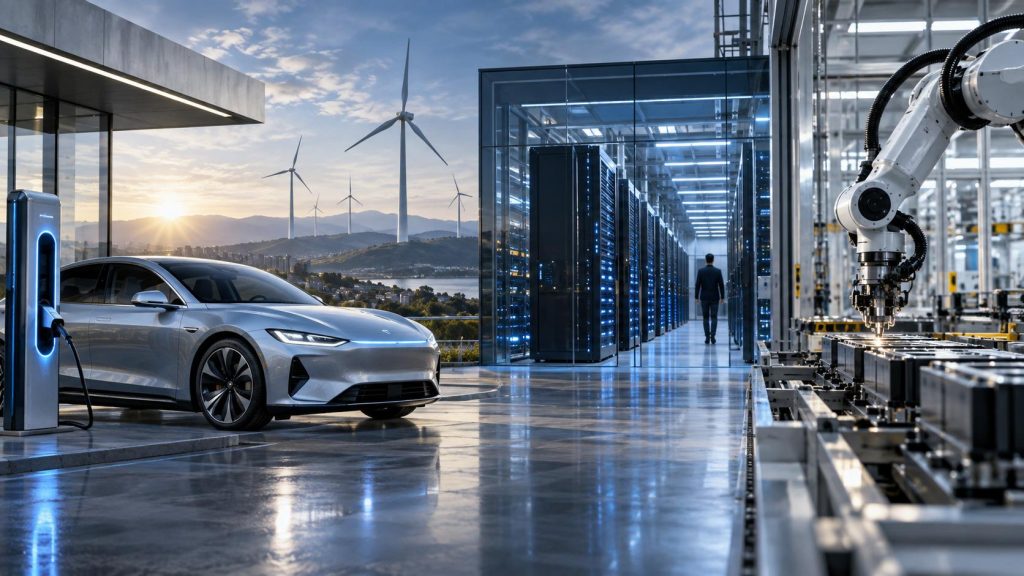
Electric cars topped 20 million sales worldwide in 2025, up 20% in a year. Electricity consumption at AI-focused data centers jumped 50%. Factories installed more than half a million industrial robots in 2024, more than twice the number a decade earlier. These technology expansions are usually discussed separately. All require electric motors, whether to propel a vehicle, cool computing equipment or move a robot’s joints.
That shared hardware creates a market for suppliers to several technology industries at once. Evolution Metals & Technologies Corp. (NASDAQ: EMAT) already manufactures rare earth permanent magnets, components that help many high-performance motors produce more power in less space. Its planned capacity expansion positions it to supply a broader market for the high-performance magnets used in electrified machinery.
The connection is physical. An EV needs motors to turn its wheels. A robot needs actuators, the mechanisms that move its arms and joints. A data center relies on motors throughout its cooling infrastructure, from fans to pumps and compressors. Some motor designs use permanent magnets, although rare-earth content varies by application and manufacturer. Each application puts a different demand on the machinery, but all depend on converting electricity into useful movement.
Wind power extends the same principle in the opposite direction: generators turn movement into electricity, with permanent magnets used in some designs. Global wind capacity grew 14% in 2025, according to the International Renewable Energy Agency. Transport, computing, factory automation and power generation are expanding for different reasons, yet they draw on overlapping electrical equipment and materials.
Robotics makes the next stage particularly visible. On September 21, Boston Dynamics announced that Atlas humanoid robots are now training inside Hyundai Motor Group’s Georgia manufacturing campus. They are learning tasks such as arranging automotive parts in the correct sequence for assembly. The center is preparing Atlas for wider commercial deployment, giving a practical example of what physical AI means: software learning to perform work in a real industrial setting.
The attraction of supplying that equipment is its reach across competing manufacturers. A magnet supplier can sell into the component chains of different vehicle brands and automation platforms. The size of that market depends on how widely the hardware is adopted, without requiring one particular carmaker or humanoid developer to dominate.
The strongest rare earth magnets are especially useful where space and performance matter. The International Energy Agency describes neodymium-iron-boron magnets, commonly called NdFeB, as among the strongest permanent magnets available. They support smaller equipment, precise motion control and energy efficiency. The U.S. Department of Energy likewise identifies high power density and efficiency as advantages of permanent-magnet vehicle motors. Other motor designs exist, so growth in electric motors does not translate automatically into equivalent magnet demand. The IEA also lists AI data centers among the technologies supported by high-performance NdFeB magnets.
The demand figures nevertheless point to a widening market. The IEA says consumption of the four rare earth elements used in these magnets has doubled since 2015 and projects another third of growth by 2030 under current policies. It expects automation, robotics and digital technologies to play a growing role beyond 2030.
Evolution Metals already manufactures magnets for that market. Its product range includes bonded and sintered magnets, and the company says it completed quality certification with two global Tier-1 electronics manufacturers across six sintered-magnet grades in June 2026.
Its September update sets out the next step: approximately 10,000 metric tons of planned annual magnet capacity at Pohang, South Korea, including about 6,000 tons of high-performance sintered NdFeB magnets. Thirteen additional ULVAC machines are on binding purchase orders, with delivery and installation scheduled for November. Achieving the expansion requires commissioning and supporting infrastructure; higher shipments also depend on customer qualification, feedstock, financing and orders.
The motor theme connects several technology expansions already under way with a further source of demand as AI moves into physical machines. Evolution Metals has an operating manufacturing base and equipment on order to increase its scale. Completing that expansion would give it more capacity to supply the high-performance magnets used across those markets.
Recent News Highlights from Evolution Metals & Technologies Corp. (NASDAQ: EMAT)
Evolution Metals & Technologies Provides Initial Revenue Guidance of $400-460mm for Fiscal Year 2027
Read This Next >>
Greenland Mines Ltd. (NASDAQ: GRML) Applies to More than Double Mining Footprint in West Greenland
Important Disclaimers and Disclosures: The author, Wall Street Wire, is a content and media technology platform that connects the market with under-the-radar companies. The platform operates a network of industry-focused media channels spanning finance, biopharma, cyber, AI, and additional sectors, delivering insights on both broader market developments and emerging or overlooked companies. Wall Street Wire is not a broker-dealer or investment adviser. References to market size estimates, valuations, price targets, or other third-party data are provided strictly for informational purposes. Wall Street Wire receives cash compensation from Evolution Metals & Technologies Corp. (the “Issuer”) for coverage and awareness services, which are provided on an ongoing subscription basis. The content above is a form of paid advertising and promotion and is for informational purposes only and does not constitute financial or investment advice. This article may contain forward-looking statements about the Issuer’s products, plans, or prospects that are subject to risks and uncertainties; actual results may differ materially, and readers should review the Issuer’s public filings on SEC EDGAR (sec.gov/edgar) for full risk factors. Market size figures, research estimates, or other third-party data referenced in this article are quoted from publicly available sources believed to be reliable; however, we do not independently verify or endorse them, and additional figures or estimates may exist. Full compensation details, information about the operator of Wall Street Wire, and the complete set of disclaimers and disclosures applicable to this content are available at: wallstwire.ai/disclosures. This article should not be considered an official communication of the Issuer.
Contact
Wall Street Wire
[email protected]